If you’re looking to get the most out of your garden space, you’ve come to the right place! Here are 12 raised bed garden layouts designed to help you use every inch wisely. Each layout comes with handy diagrams and smart planting strategies, making it easy to visualize and implement. Whether you’re a beginner or a seasoned gardener, these ideas will inspire you to create a productive and thriving garden.
Pathway Integration in Garden Design
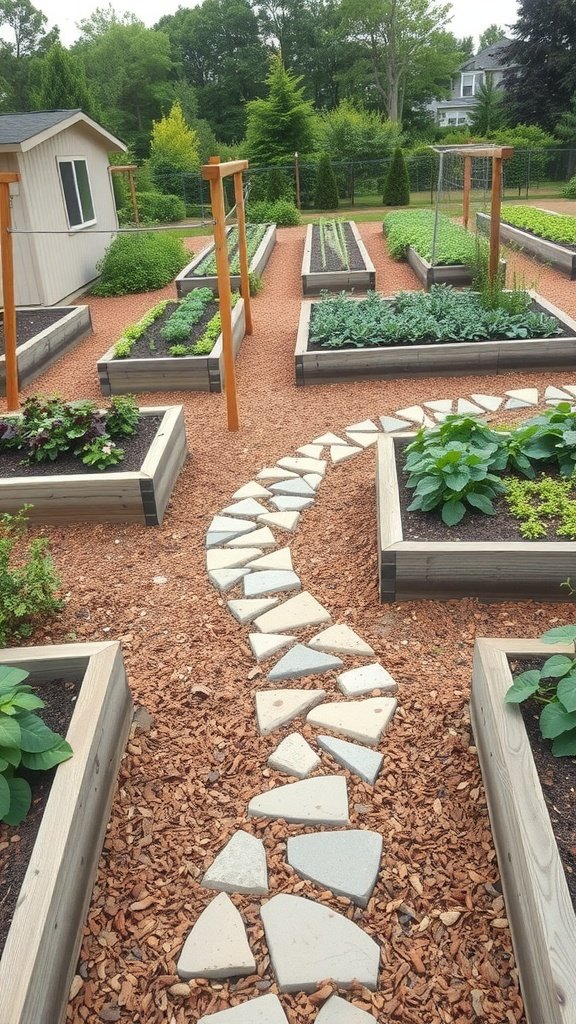
Incorporating pathways into your garden layout can change everything about your raised bed garden. It not only improves accessibility but also adds a visual appeal that enhances the overall design.
The image above showcases a well-integrated pathway winding through a series of raised planter designs. These paths guide you effortlessly between the garden beds, making it easy to reach your plants without stepping on soil or damaging crops.
When planning your garden layout ideas, consider the materials for your pathways. In this case, stone and wood chips create a natural look that complements the greenery. Such a design can elevate your square foot gardening techniques, allowing for a tidy and organized space.
The curved path in the image encourages exploration and draws the eye, making the garden feel larger. This is especially useful in smaller spaces, where maximizing every inch is vital. By allowing air and light to circulate around your plants, you support their growth while making your garden aesthetically pleasing.
Remember that your pathways can also serve practical purposes. They can be used to support trellises or other vertical gardening elements, making the most of vertical space. This is another great way to maximize productivity in a raised bed garden.
Tiered Raised Bed Arrangement
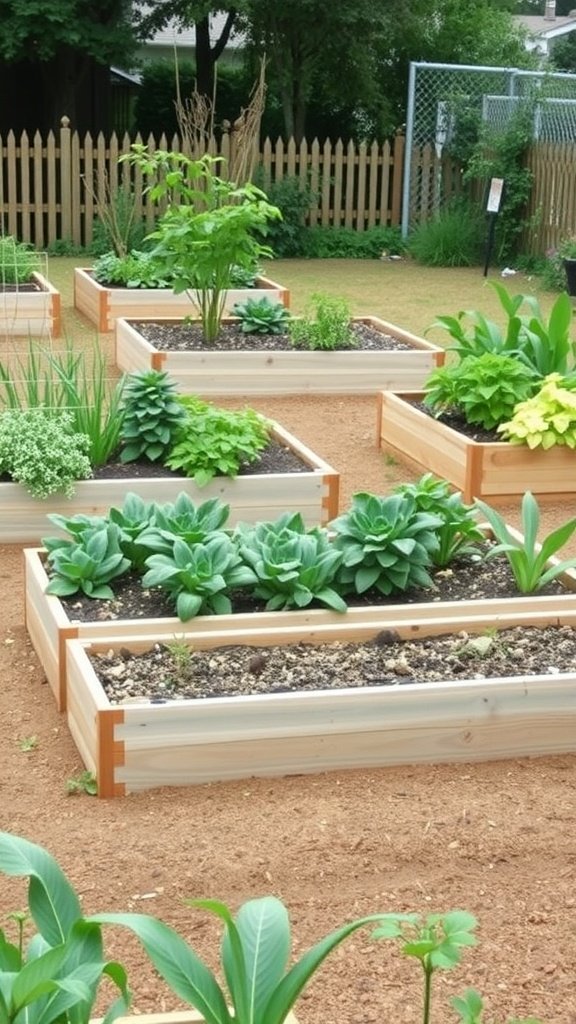
The tiered raised bed arrangement is a fun and efficient way to use space in your garden. By stacking raised beds at different heights, you create a visually appealing layout while maximizing every inch of soil. This setup not only looks neat but also allows for better drainage and sunlight access for your plants.
In the image, you can see several raised beds arranged in a staggered pattern. This design invites a sense of depth and dimension to the garden space. Each bed can be filled with a variety of plants, from leafy greens to vibrant flowers, making it a great choice for both aesthetics and productivity.
When planning your tiered arrangement, think about the types of plants you want to grow. Taller plants can go in the back or higher tiers, while shorter ones fit well in the front or lower levels. This strategy not only enhances visibility but also makes caring for your plants easier. Utilizing square foot gardening principles can help you organize your beds efficiently, ensuring you get the most out of your growing area.
Consider adding some pathways between your beds for easy access. This layout not only maximizes space but also creates a charming garden atmosphere. It encourages exploration and makes gardening feel less like a chore and more like a delightful hobby.
L-Shaped Raised Bed Design
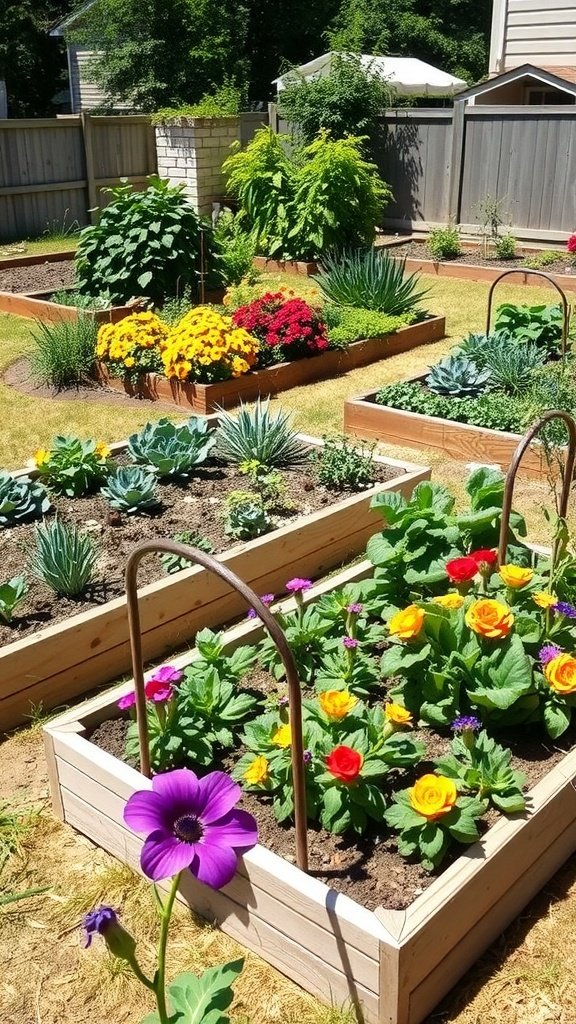
L-shaped raised bed gardens are a clever way to optimize your gardening space while adding a unique aesthetic to your yard. This design allows for easy access to plants from multiple angles, making it perfect for square foot gardening. The configuration can fit snugly into corners or odd spaces, maximizing every inch of your outdoor area.
In the image, you can see a beautiful arrangement of raised beds filled with vibrant flowers and lush greenery. This layout not only showcases the colors and textures of different plants but also illustrates how various garden layout ideas can be implemented effectively.
Using this design, you can easily organize your planting with companion planting strategies. For instance, placing taller plants on one side while shorter plants occupy the front enhances sunlight exposure for all. It’s a great way to ensure that your raised planter designs are both functional and visually appealing.
To get started, consider the dimensions of your available space and what plants you’d like to grow. You can personalize your L-shaped garden to include herbs, vegetables, or flowers, allowing for a diverse and productive raised bed garden. Plus, the shape encourages you to think creatively about planting strategies, leading to a flourishing garden.
Circular Garden Layout

The circular garden layout is an engaging way to arrange your raised beds while maximizing every inch of space. This design encourages a sense of flow and connection in your garden. With the raised planter designs arranged in a circular format, it creates visual interest and easy access to all your plants.
In the center, you can see a square raised bed filled with a variety of colorful flowers and leafy greens. Surrounding it, other raised beds are filled with herbs and vegetables, allowing for a diverse range of plants that can thrive together. This layout is not only functional but also adds an artistic touch to your garden.
Using square foot gardening principles, you can plant multiple varieties in small spaces. By organizing your raised bed garden in this circular fashion, you can effectively utilize every square foot, ensuring that no area goes to waste. Consider planting herbs around the outer edges, where they can thrive in full sunlight while providing easy access for harvesting.
This layout is great for beginners and seasoned gardeners alike. It encourages creativity and experimentation with different planting strategies. Plus, with such a visually appealing garden layout, it’s sure to be a hit on Pinterest!
Incorporating Edible Flowers
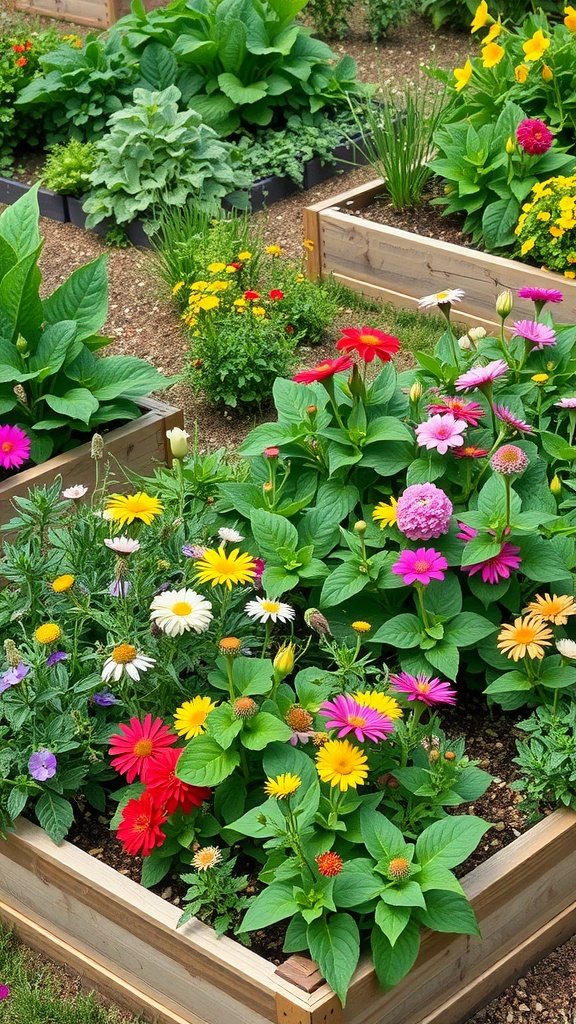
Edible flowers are a delightful addition to any raised bed garden. Not only do they add color and beauty, but they also enhance your culinary creations. Flowers like nasturtiums, pansies, and marigolds can be used in salads, desserts, or as garnishes. Imagine a vibrant garden layout filled with these blooms, making both your garden and your plate more appealing.
When planning your raised planter designs, think about spacing. Square foot gardening is a great method to maximize every inch. By grouping flowers with compatible plants, you can create a lush, productive garden. For example, pair tall sunflowers with low-growing herbs to make the most of vertical space.
Consider layout ideas that integrate edible flowers throughout your garden. For instance, a border of bright zinnias can frame your vegetable plots beautifully. You can also create dedicated sections in your raised beds for specific flower types that attract pollinators, which can help boost the health of your entire garden.
Make sure to check which flowers are safe to eat and how to prepare them. Some flowers have unique flavors that can enhance your dishes, while others might require special care before consumption. With careful planning, your garden can be a feast for both the eyes and the palate.
Companion Planting Strategies
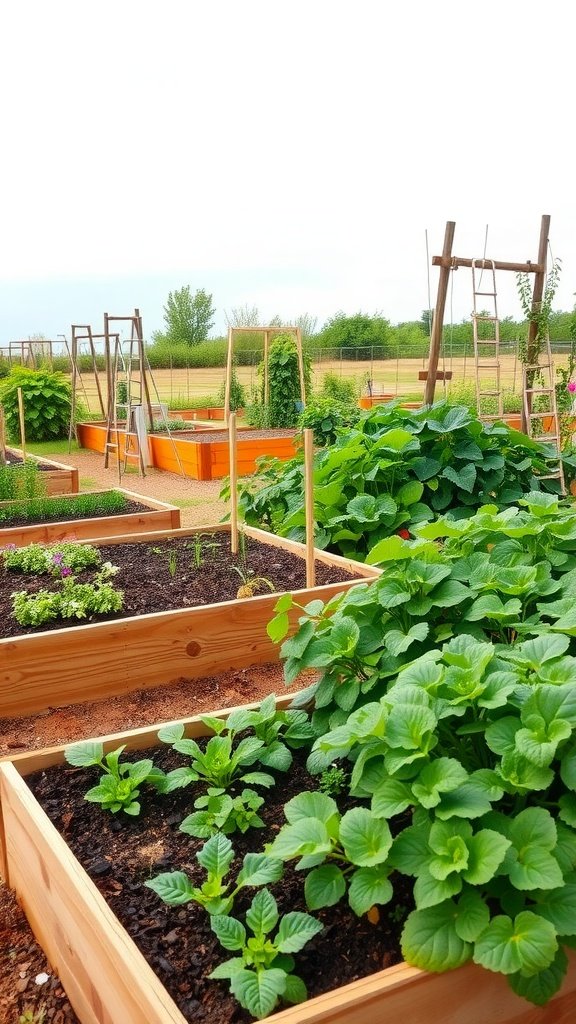
Companion planting is a clever way to boost your garden’s productivity, especially in raised bed gardens. By pairing plants that benefit each other, you can maximize every inch of your raised planter designs. The image showcases several raised beds filled with vibrant plants, illustrating how thoughtful arrangements can lead to thriving gardens.
In this section, we’ll explore some effective companion planting strategies that fit perfectly with various garden layout ideas. For instance, planting basil alongside tomatoes can enhance the flavor of the tomatoes while repelling harmful pests. Meanwhile, carrots and onions make excellent partners, as the onion’s strong scent can deter carrot flies.
When planning your garden, consider square foot gardening techniques. This method allows for efficient spacing and encourages the use of companion plants. For example, try growing lettuce with radishes, as the radishes can mature quickly and create shade for the slower-growing lettuce.
Another classic combination is planting marigolds with almost any vegetable. Marigolds deter numerous pests and attract beneficial insects, making them a valuable addition to any raised bed garden. You can see how these plants work together harmoniously in the image, where different plants are grouped to optimize growth.
As you explore the layout ideas for your raised beds, incorporate these companion strategies to create a thriving ecosystem right in your backyard. With careful planning and a little creativity, you can enjoy a bountiful harvest while making the most out of your garden space.
Square Foot Gardening Technique
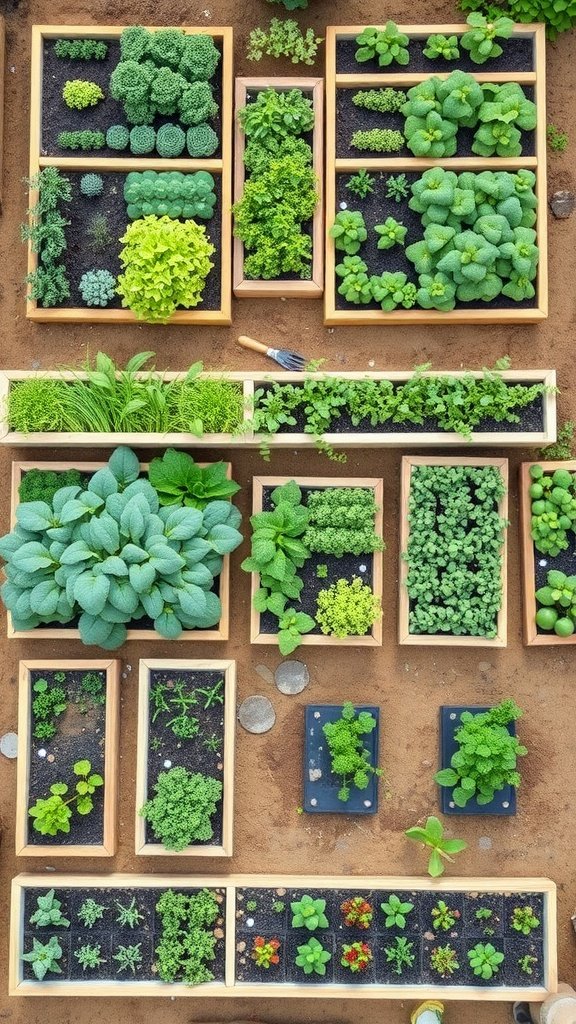
The square foot gardening technique is a clever way to use space efficiently in a raised bed garden. This method divides the garden into square sections, typically one foot by one foot, allowing you to plant different crops in a compact layout. By organizing your garden this way, you maximize every inch and create a diverse planting scheme that can be both beautiful and productive.
In the image, you can see a well-organized raised bed garden layout. Each square is densely packed with various plants, showcasing how square foot gardening works in practice. Different herbs, leafy greens, and even some flowering plants coexist in harmony, demonstrating the potential for variety without overcrowding.
When planning your own raised planter designs, think about what crops you enjoy and how much space they need. For instance, you can plant more compact varieties like lettuce or herbs in each square while allowing more space for larger plants such as cucumbers or tomatoes. This results in effective garden layout ideas that cater to your taste and space constraints.
Using this technique not only helps in managing space but also simplifies the gardening process. You can easily track what you’ve planted, making it easier to care for each section. Consider incorporating different plant heights and colors to create a visually appealing garden that invites you to spend time outdoors.
When you apply the square foot gardening technique, you can enjoy an abundant harvest without the stress of traditional row planting. So if you’re looking to create a vibrant raised bed garden, give this method a try. You’ll be amazed at how much you can grow in just a small area!
Vertical Garden Solutions
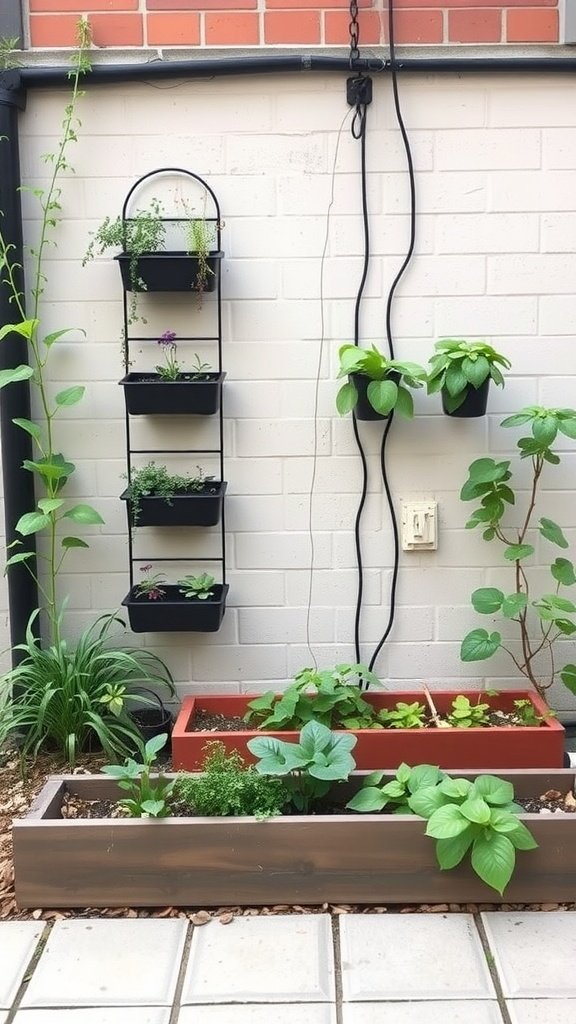
Vertical gardening is a smart way to maximize space, especially in small areas. The image showcases raised planters alongside a vertical structure with pots. This layout is practical and adds a bit of style to your garden.
Using vertical space allows you to grow herbs, flowers, or even vegetables above ground level. It creates a lush look while keeping your plants easily accessible. This method is ideal for square foot gardening, where every inch counts.
Consider incorporating a mix of planting strategies. For instance, taller plants can go in the raised beds while herbs can thrive in the vertical garden. This layering not only enhances aesthetics but also promotes healthy growth by maximizing sun exposure for all plants.
Here are 12 raised bed garden layout ideas to inspire you:
- Vertical Tower: Stack pots vertically to save space.
- Traditional Rectangular: Simple yet effective, great for beginners.
- L-Shaped Design: Ideal for corner spaces.
- Hugelkultur: A raised bed that incorporates logs for moisture retention.
- Triangular Beds: Perfect for tight spots.
- Pathway Layout: Create walkways between raised beds for easy access.
- Boxed Square: Organize plants in squares for better management.
- Hanging Planters: Utilize walls or fences for additional planting.
- Multi-Tier: Tiered beds to elevate different plants.
- Interplanting: Mix different species in the same bed for diversity.
- Grid Pattern: Use grids to maximize space in square foot gardening.
- Herb Spiral: Create a spiral bed for herbs with varying needs.
Remember, the goal is to maximize every inch of your space while keeping your garden functional and beautiful!
Square Layout with Rotational Zones
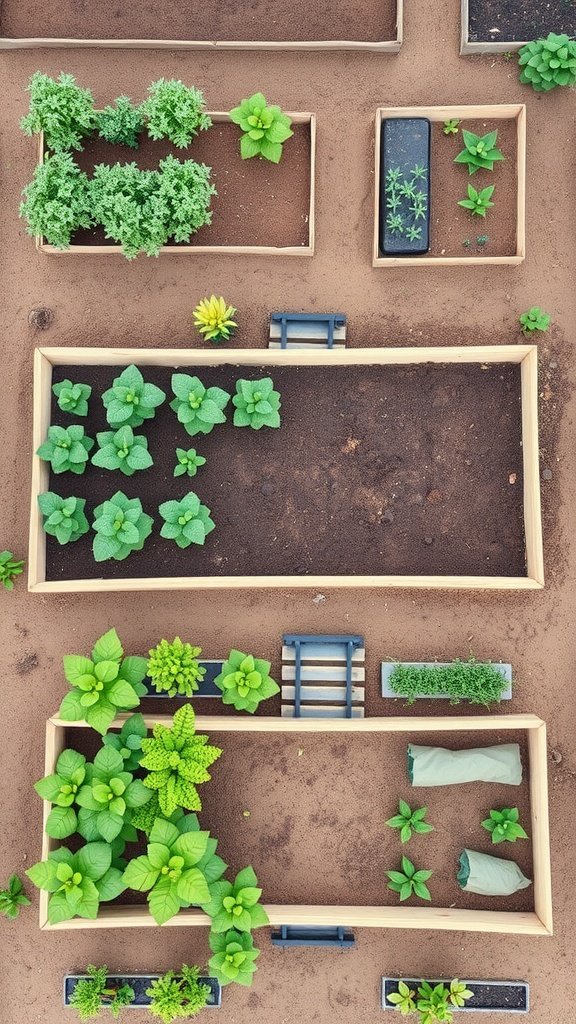
The square layout with rotational zones is a smart way to utilize every inch of your raised bed garden. This design allows for efficient planting by grouping similar plants together while making sure they receive adequate sunlight and water.
In the image, you can see a variety of plants organized in neat, raised planter designs. Each section is thoughtfully planned out to maximize space. The larger beds can accommodate bigger plants, while smaller plots are perfect for herbs and compact varieties.
Rotational zones mean that you can change what you plant in each section each season. This practice helps maintain soil health and prevents pests and diseases from taking hold. For example, after harvesting leafy greens, you might follow up with root vegetables in the same area. This not only keeps your garden productive but also keeps it interesting!
When considering garden layout ideas, think about how you can incorporate different heights and types of plants. Grouping plants with similar water and light needs can make care easier. With square foot gardening, each square can host a different type of plant, giving you diversity in your harvest.
This layout is not only practical but also visually appealing. It encourages a productive atmosphere where every inch is used wisely. So grab your gardening gloves and get started on this layout; your plants will thrive!
Hugelkultur Raised Bed
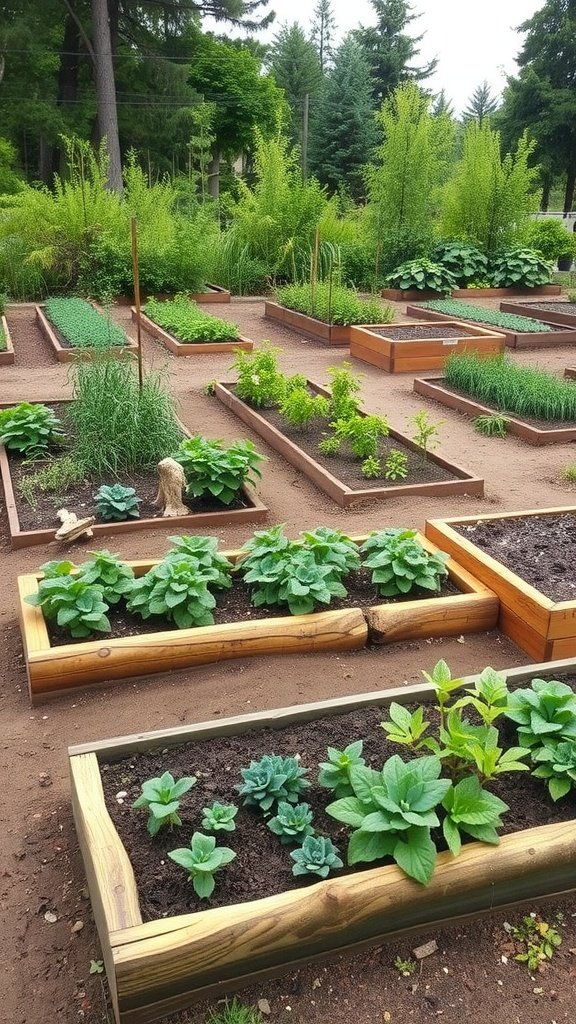
The Hugelkultur method is a unique approach to gardening that uses decomposing wood and other organic materials to create raised beds. In the image, you can see various raised beds flourishing with plants. Each bed is carefully designed to maximize space and productivity, which is essential in any garden layout idea.
Using Hugelkultur not only improves soil quality but also retains moisture, reducing the need for frequent watering. This technique is particularly beneficial if you’re practicing square foot gardening, as it allows for intensive planting in smaller areas. You can see lush greens and vibrant vegetables arranged neatly, showcasing how this method can support a variety of plants.
When planning your raised planter designs, consider incorporating Hugelkultur alongside traditional raised beds. This combination can help you create a diverse garden that thrives. Remember, the key is to layer materials like logs, branches, and compost, which will break down over time, adding nutrients back into the soil.
For those looking to optimize every inch of their garden, Hugelkultur provides an excellent option. It’s a sustainable choice that benefits both your plants and the environment, ensuring you make the most of your gardening efforts.
Intercropping Design for Diversity
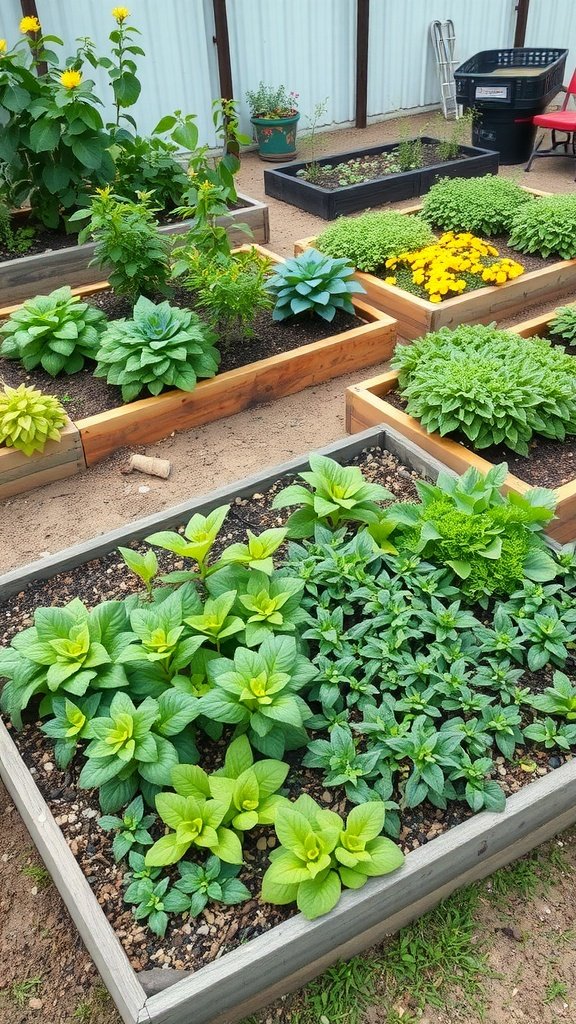
Intercropping is a gardening strategy that brings together different plants in a single space, enhancing both biodiversity and productivity. In the image, you can see a raised bed garden filled with various leafy greens and herbs, illustrating how multiple plant types can thrive in close proximity.
This kind of garden layout not only maximizes every inch of your space but also helps in pest control and encourages pollination. By mixing plants like leafy greens with flowering herbs, you can create a lively ecosystem that supports healthy growth.
For those considering garden layout ideas, think about using the square foot gardening method. This technique involves dividing your raised bed into smaller squares, allowing for strategic planting. For example, you can plant fast-growing crops like lettuce alongside slower-growing ones, such as kale. This ensures that each plant gets ample sunlight and nutrients without competing too harshly with its neighbors.
If you want to experiment with raised planter designs, consider layering taller plants, like sunflowers or tomatoes, with shorter plants like basil or spinach. This not only adds visual interest but also allows for efficient use of vertical space.
These strategies are especially beneficial for small gardens where every inch counts. By intercropping, you’ll not only enjoy a variety of crops but also a more resilient garden ecosystem.
Seasonal Rotation in Beds
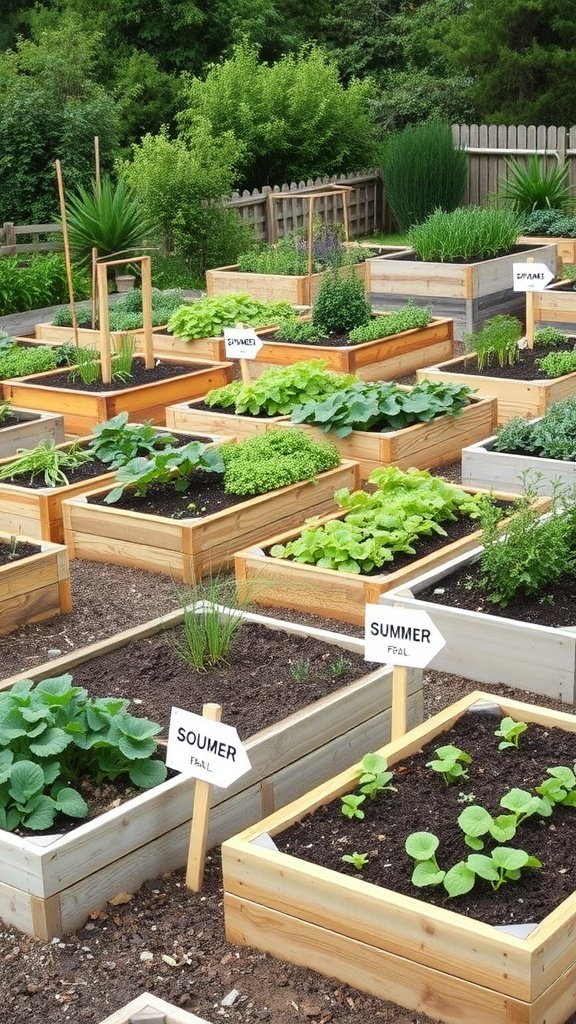
When it comes to gardening, seasonal rotation is key to keeping your raised bed garden thriving. The image shows a well-organized setup with different beds labeled for spring, summer, and fall crops. This thoughtful arrangement helps maximize space and productivity, ensuring you can enjoy fresh produce throughout the year.
Using raised planter designs like those in the photo allows for better soil management and drainage. Each bed can be dedicated to specific plants suited for the season. For instance, leafy greens thrive in cooler temperatures, while tomatoes and peppers love the warmth of summer.
Square foot gardening is another technique that pairs well with seasonal rotation. By dividing each raised bed into sections, you can plant a variety of crops in a compact space. This strategy not only increases yield but also makes it easy to manage different growing seasons.
Consider switching crops each season to prevent nutrient depletion and control pests. For example, after harvesting your spring veggies, you might plant summer squash in the same bed. This rotation keeps your garden healthy and productive.
Here are some garden layout ideas to inspire your own seasonal rotations: 1) Spring greens and radishes, 2) Summer squash and cucumbers, 3) Fall carrots and beets, 4) Mixed herbs throughout the year, 5) Tomatoes with companion plants like basil, 6) Spinach followed by carrots, 7) Peppers with marigolds, 8) Zucchini and corn together, 9) Lettuce with onions, 10) Peas in spring, followed by beans in summer, 11) Potatoes followed by winter crops, 12) Fruit bushes alternating with flowers.
By incorporating these strategies into your raised bed garden, you’ll not only maximize your space but also enjoy the fruits of each season’s labor.


Leave a Reply