
Did you know that about 30% of pet owners don’t realize how cold their pets can get indoors in winter? This shows how important it is to take good care of pets during the cold months. Winter poses special challenges for pets, making it key for owners to keep them safe and warm.
From making sure pets are cozy indoors to adjusting their food, there are many steps you can take. These actions help keep your pets happy and healthy all winter long.
It’s crucial to pay close attention to your pet’s needs during winter. About 25% of small breed dogs feel the cold too much, which can cause them discomfort and health problems. Also, pets lose heat fast, and 86% of owners think it’s vital to keep them warm for their health1.
This article will give you useful tips and advice to keep your pets safe and warm during the coldest winter months.
Key Takeaways
- Most pets need extra warmth when it gets below 45°F.
- A lot of pet owners don’t change their pets’ diet in winter, even though they need more energy.
- Many pet owners forget to protect their pets’ paws from ice or salt.
- Pets need more calories in the cold months to stay warm.
- Many pets get dry skin and coats because of indoor heating.
The Importance of Winter Pet Care
Winter brings cold weather and dangers for pets. They can get frostbite and hypothermia, showing signs like shivering and being very tired2. Owners need to keep pets safe from the cold to avoid serious health problems2. Pets might need more food to stay warm because they use more energy in the cold2.
More pets get lost in winter because of the weather2. Over 60% of pets have skin problems from the dry air and need special care2. It’s important to groom them right and not bathe them too often to keep their skin healthy2.
Keeping pets hydrated is key, as many don’t drink enough water in the cold2. Using heated water bowls can help prevent dehydration. Also, pets are more likely to get hurt from ice and salt in winter2.
Talking to a vet for winter care tips is a good idea2. It helps make sure pets stay healthy and safe all winter2. Taking care of pets in winter makes everyone happier and healthier.
Keeping Pets Warm Indoors
Pets, like humans, do better in warm places during winter. To keep them cozy indoors, we need to focus on keeping pets warm in winter. This means giving them cozy bedding for pets. Heated beds or warm blankets are great for small or older pets that get cold easily.
Pets can handle cold differently. Short-haired or small pets need extra care to stay warm. Make sure their beds are away from cold air and keep the humidity right to prevent dry skin3. It’s also smart to have a kit ready with enough food and water for five days3.
Make sure pets always have access to fresh, unfrozen water, especially if they go in and out4. In the cold, pets might need more food to stay warm. Talk to a vet to find the best food for your pets in winter3.
Winter Apparel for Your Pets
As winter comes, it’s key to dress your pets right. Some pets, like older ones or small breeds, really need a winter coat. This keeps them warm, especially when it’s cold outside5.
Choosing the right material is important. Look for something water-resistant. This helps keep them warm during walks or playtime5.
Finding the right fit is crucial. Measure your pet’s neck, chest, and waist to get the right size. Brands may have different sizes, so pay attention to how it fits5. The clothes should be snug but still let them move freely.
When picking out winter clothes, think about what they offer. Look for clothes that breathe, are tough, and can be washed in a machine. They should also be water-resistant. Many stores have special winter clothes for pets6.
| Temperature (°F) | Recommended Attire | At-Risk Pets |
|---|---|---|
| Above 45 | No clothing needed | Most pets |
| 32 – 45 | Light coat recommended | Small breeds, older pets |
| 15 – 32 | Winter coat | At-risk dogs |
| Below 15 | Heavy winter attire | Senior dogs, small breeds |
Keep an eye on your pets when it’s cold. Make sure they have what they need to stay warm56.
Mind the Paws: Protecting Sensitive Feet
Winter weather is tough for pet owners, especially when it comes to protecting pet paws. The cold can cause cuts from sharp ice and painful snow clumps7. It also raises the risk of frostbite7. Ice-melting chemicals can irritate pets’ skin and cause serious health problems if they eat it8.
To keep pets safe outside, clean their paws after walks8. Check their feet for damage, like cracks or limping9. This helps catch problems early and prevent more harm.
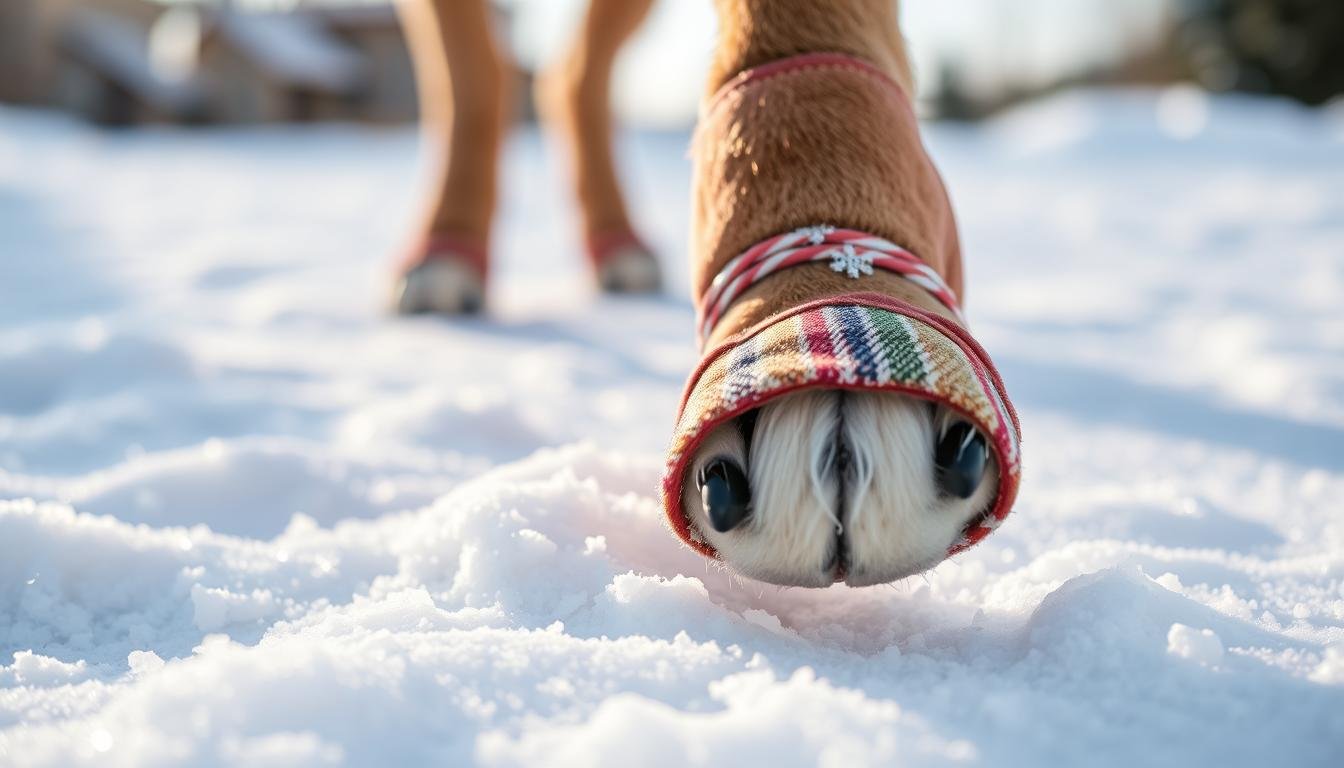
Using dog boots is a great way to prevent frostbite7. Good boots protect against ice, snow, and chemicals7. Look for boots that are light, adjustable, and waterproof for better comfort7.
Apply paw balm before going outside to protect against dampness and rough terrains7. But remember, balms don’t protect against sharp objects7.
Keep your pet’s paws clean by trimming hair between the pads9. Make sure they drink enough water to keep their paws healthy8.
Winter Pet Care: Nutrition and Hydration
As winter comes, keeping your pet healthy is key. Pets need more food when it’s cold to stay warm and active1011. Indoor pets might need less food because they’re less active10.
Adjusting Diet for Cold Weather
Pets burn more energy to stay warm in the cold12. Talk to your vet to make sure your pet gets the right food. Some pets, like those with thin fur, need extra care in the cold11.
Ensuring Fresh Water Availability
Don’t forget about keeping your pet hydrated in winter. Cold weather can dry out pets just like hot weather1112. Make sure they always have clean, unfrozen water. Wet food can also help keep them hydrated10.
| Aspect | Focus for Winter | Tips |
|---|---|---|
| Diet | Caloric Increase | Consult veterinarian for specific nutritional needs. |
| Hydration | Fresh Water | Ensure water is unfrozen; use wet food for additional moisture. |
| Monitor | Weight Management | Avoid overfeeding by adjusting portions based on activity. |
Indoor Activities for Pets During Winter
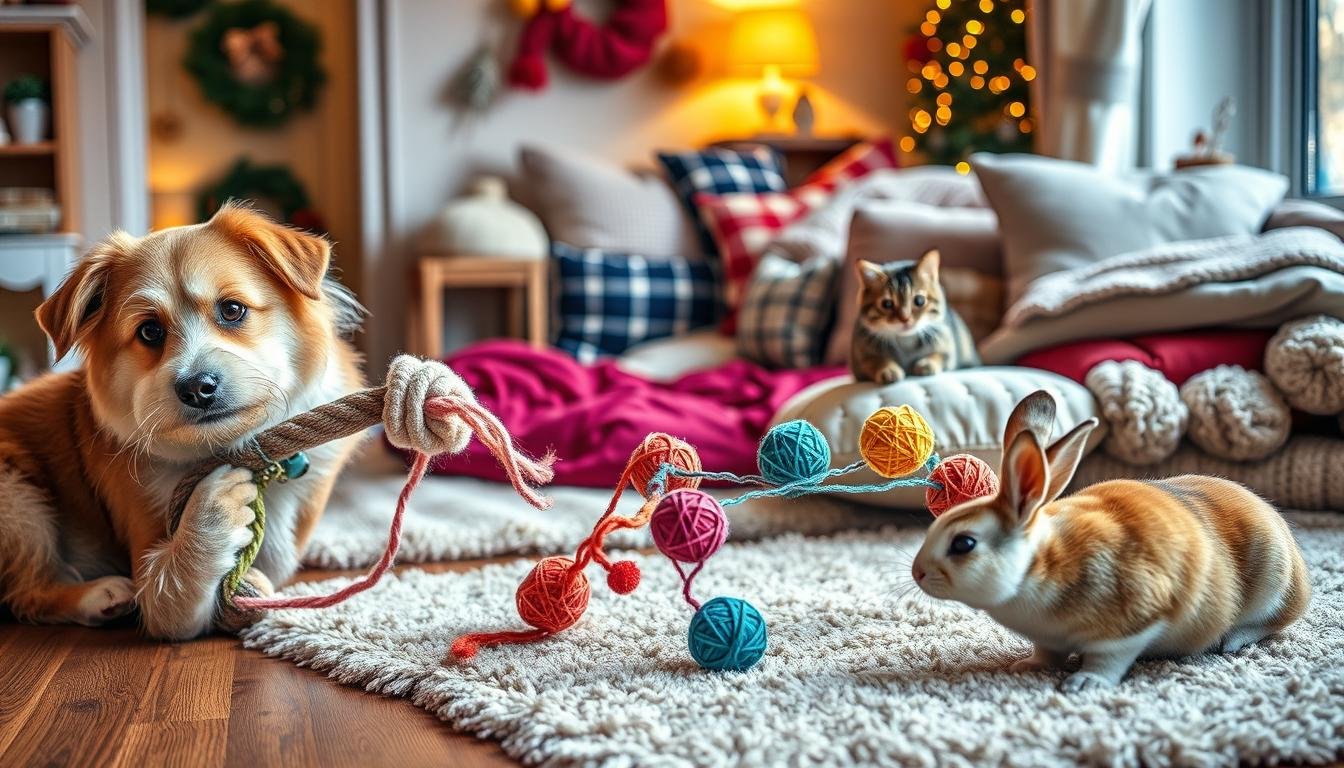
Winter can be tough for pets and their owners. Cold weather limits outdoor fun. It’s key to keep pets active and happy indoors.
Fun indoor games and activities help. They keep pets entertained and strengthen the bond between pets and owners.
Interactive Toys and Games
About 60% of pet owners worry about their pets not getting enough exercise in winter13. Interactive toys like PupPod or Starmark Bob-a-lot are great. They keep pets busy and happy.
Games like hide-and-seek boost recall by up to 50%13. Scent-based activities also help, with 85% of trainers recommending them13. With less outdoor time, indoor play is more important.
Training Sessions from Home
Winter is a great time for dog training. 75% of owners do basic obedience training during this season14. Training keeps dogs mentally sharp and prevents bad behavior.
Exercises like ‘Two Feet Up’ improve a dog’s core in just four weeks13. Tricks like standing leg lifts can be learned in a week, with over 70% success rate13. Indoor training keeps pets fit and strengthens the bond with their owners.
Regular Grooming for Winter Conditions
Winter grooming is key to keeping pets’ coats healthy and warm. Many dogs grow thicker coats in winter for warmth. This means grooming needs to change to keep them comfortable15.
Brushing regularly helps remove dead hair and spreads natural oils. This reduces matting, a big problem in cold weather15. But, don’t over-bathe as it dries out their skin16. Use a moisturizing conditioner or safe moisturizer to keep their skin moist, especially when it’s flaky15.
Keeping pet fur in check in winter means watching their grooming needs closely. Groom them every 4-6 weeks to keep their coat healthy and mat-free16. Trimming nails is also important to prevent slipping on ice16. Wipe their paws with a warm, damp cloth after walks to remove dirt and irritants16.
For dogs that go outside a lot, use pet-safe paw balms to protect their paws from the cold16.
Keeping pets hydrated is crucial for their skin and coat health in winter15. If they have dry skin or mats, regular grooming by professionals is a good idea. They use special products for winter17. A diet rich in fatty acids helps keep their coat healthy and prevents dryness15.
Regular grooming sessions can also make pet care in cold weather easier. It helps keep pets happy and healthy during winter’s quieter months17.
Recognizing Signs of Hypothermia and Frostbite
As temperatures drop, it’s crucial for pet owners to know the dangers of cold weather. Knowing the signs of hypothermia and frostbite can save a pet’s life. Pets face serious health risks in cold weather, so spotting early symptoms is vital.
Understanding the Symptoms
Hypothermia happens when a pet’s body temperature drops too low. A temperature under 99°F is a clear sign of hypothermia18. Pets may shiver, act tired, and not want to move if they’re cold18. Changes in their ears or paws can also signal distress.
Frostbite mainly affects a pet’s paws, ears, and tail. Look for pale or cold skin, swelling, blisters, and ulcers19. If the skin turns black, it’s a sign of severe frostbite and needs vet care right away20. Knowing these signs helps you act fast.
What to Do If You Suspect Frostbite
Act quickly if you think a pet has frostbite. Warm the affected areas slowly with water between 98.6°F to 113°F19. You might also need to manage pain as the area thaws19. Gently touching the area can show how bad it is. If you see blisters or color changes, especially in ears, paws, or tail, call a vet fast20.
Check your pet often when you’re out in winter. Try to keep them inside when it’s very cold or windy. Use pet-friendly winter gear18. Watching your pet closely keeps them safe and happy during the cold months.
Winter Pet Safety Tips
Keeping pets safe in winter needs careful attention and action. It’s important to limit their time outside when it’s very cold. Pets with short coats can get frostbite or hypothermia if left alone in cars. They need a warm place to stay away from the cold.
Antifreeze is a big danger, found in garages and driveways. Even a little bit can be deadly to pets. Signs of poisoning include feeling sick or dizzy. Keep antifreeze safe and clean up spills fast21.
Indoor safety is also key in winter. Keep harmful plants and decorations away from pets. Tinsel and ribbons can block their intestines, happening about 30% of the time22. The ASPCA gets about 200,000 calls about pets getting sick during holidays22.
Regular vet visits and watching your pets’ behavior in winter can prevent injuries. Make sure they have ID tags and microchips. This way, you can keep them safe from getting lost in the snow. Staying informed and talking to your vet can also keep your pets healthy23.
Conclusion
Winter brings joys for pet owners but also challenges. Cold weather can harm pets, especially small ones and those with short coats. It’s key to keep them warm with clothes and shelter.
About 80% of pet owners want help keeping their pets safe in the cold. This shows the need for good care during winter24.
To care for pets in the cold, keep them warm indoors, groom them regularly, and feed them right. They might need more calories in the cold and drink less water. This means adjusting their diet is important2425.
Also, keep outdoor time short and watch for cold stress signs like shivering or being very tired. This helps protect your pets from the cold25.
Putting pets first in winter means making their space safe, comfy, and fun. By following this guide, your pets can enjoy winter and stay healthy.
FAQ
How can I keep my pet warm in winter?
What are the signs of hypothermia in pets?
How often should I groom my pet in winter?
How do I protect my pet’s paws in cold weather?
Do pets need extra food in winter?
What indoor activities can I do with my pet during winter?
How can I prevent frostbite in my pet?
What should I do if I suspect my pet has frostbite?
What winter pet safety tips should I prioritize?
Source Links
- 10 Tips For Winter Pet Care To Keep Your Furry Friends Happy And Healthy – Sava Vet
- Winter Pet Care: Essentials and Tips
- Cold weather animal safety
- Chilly Weather, Cozy Pets: Winter Pet Care Tips from Vets
- Dog Duds: Winter Clothes for Your Pets
- Winter Clothing Guide for Dogs | Winter Weather Safety
- How To Protect Your Dog’s Paws in the Winter: 5 Tips for Pet Parents
- 9 Tips for Protecting Your Dog’s Paws in the Winter | Bond Vet
- Winter Foot Care and Injury Prevention for Bird Dogs – RGS
- Winter Pet Safety: How to Keep Your Pets Warm and Healthy
- Winter Pet Care: Keep Your Furry Friend Cozy & Safe
- Top Winter Care Tips for Your Pets
- 6 Indoor Activities for Dogs to Keep Them Fit in Winter
- Winter Activities to Keep Your Dog Entertained in St. Paul, MN | St. Paul Pet Hospital
- Grooming in Winter: 10 Tips for Maintaining Pet Coat Health
- The Crucial Reasons to Groom Your Dog in Winter
- Pet Grooming in Winter: Essential Tips and Tricks
- Recognizing and Treating Pet Hypothermia and Frostbite – Dupont Veterinary Clinic
- Frostbite in Dogs | VCA Canada Animal Hospitals
- Frostbite on Dogs: Signs, Treatment, and Prevention
- 6 Winter Pet Safety Tips | Happy Healthy Pets™
- Winter holiday pet safety
- SPCA ISSUES WINTER PET SAFETY TIPS – Dog, Cat, Pet Adoption, Animal Shelter in Buffalo
- Winter Pet Safety: A Guide for Responsible Pet Sitters | Scout
- Winterizing Your Pet’s Care: Cold Weather Tips for a Happy and Healthy Season


Leave a Reply