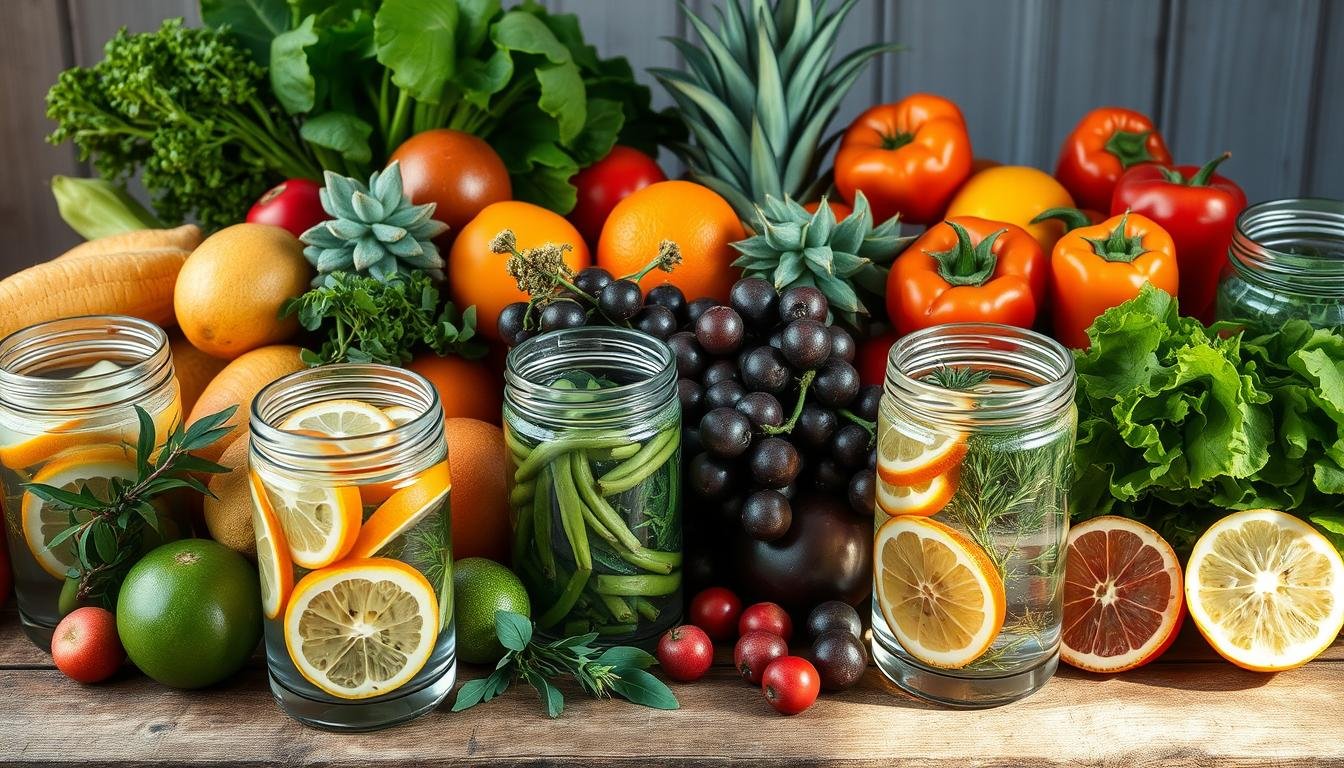
Eating well and drinking enough water are key to staying healthy. They help prevent diseases and boost energy. Drinking water also helps keep your body working right by removing waste.
Knowing how important food and water are helps you make better choices. Eating foods rich in nutrients and drinking plenty of water can lower disease risk. It also helps you feel more energetic and healthy.
Introduction to Healthy Habits
Healthy habits like eating right and drinking water are crucial. They help you stay well and avoid serious health problems. By focusing on nutrition and hydration, you can greatly improve your health.
Key Takeaways
- Good nutrition is essential for maintaining good health and preventing chronic diseases.
- Proper hydration helps to regulate body temperature, transport nutrients, and remove waste products.
- A combination of good nutrition and hydration can have a significant impact on overall health and wellness.
- Consuming a variety of nutrient-dense foods can help to support overall health and wellness.
- Staying hydrated is essential for maintaining energy levels and supporting overall health.
- Developing healthy habits, such as eating a balanced diet and staying hydrated, can have a significant impact on overall health benefits.
Understanding the Basics of Nutrition and Hydration
A balanced diet is key to good health. It begins with knowing how macronutrients work in our bodies. These include carbs, proteins, and fats, which give us energy and help our bodies function. It’s important to get the right amount of these nutrients every day.
For a balanced diet, it’s not just about what we eat. Drinking enough water is also crucial. Water helps with digestion, keeps our body temperature right, and moves nutrients and oxygen to our cells. Drinking at least eight glasses of water a day is recommended to stay hydrated.
The Role of Macronutrients
Macronutrients are vital for our health, and we need them every day. Here are some important facts:
- Carbohydrates give us energy.
- Proteins help build and fix tissues.
- Fats provide energy and help us absorb vitamins.
Why Proper Hydration Matters
Drinking enough water is key for good health. Even a little dehydration can make us tired, give us headaches, and make it hard to focus. It’s important to drink water all day to stay hydrated and follow a balanced diet.
| Macronutrient | Function | Daily Intake |
|---|---|---|
| Carbohydrates | Provide energy | 45-65% of daily calories |
| Proteins | Build and repair tissues | 10-35% of daily calories |
| Fats | Provide energy and support vitamin absorption | 20-35% of daily calories |
A balanced diet that includes the right amount of macronutrients and enough water is vital for health. By knowing how macronutrients work and staying hydrated, we can start living a healthier life.
Essential Foods for Optimal Health
Nutrition is key to staying healthy. Eating a variety of essential foods gives your body what it needs. This includes vitamins, minerals, and macronutrients for proper function. A diet rich in whole foods like fruits, vegetables, and lean proteins supports wellness.
Try to eat foods of different colors to get many nutrients. Leafy greens like spinach are full of iron and calcium. Citrus fruits are packed with vitamin C. Whole grains and lean proteins add fiber and omega-3s to your diet.
- Fatty fish like salmon and sardines for their omega-3 fatty acids
- Sweet potatoes and carrots for their vitamin A content
- Almonds and walnuts for their healthy fats and antioxidants
- Legumes like lentils and chickpeas for their protein and fiber
Eating these essential foods helps your body work well. It also lowers the risk of chronic diseases. Always talk to a healthcare expert or dietitian to find the right diet for you.
The Science Behind Foods and Water Intake
It’s important to know how our bodies process food and water for good health. Our bodies break down nutrients into energy and growth through metabolic processes. This is key for our bodies to work right, and it’s affected by what we eat and how hydrated we are.
Metabolic Processes and Nutrient Absorption
When we eat, our bodies start metabolic processes to turn carbs, proteins, and fats into energy. This energy powers our body’s functions, like moving and thinking. Nutrient absorption is crucial because it lets our bodies get the nutrients they need from food. Eating a variety of whole foods helps support these processes.
Hydration Chemistry
Hydration chemistry is also key for our health. Drinking water helps our bodies by keeping temperature stable, moving nutrients and oxygen, and getting rid of waste. Good hydration chemistry keeps our skin, muscles, and organs healthy. It also boosts our immune system and overall health.
| Process | Description |
|---|---|
| Metabolic Processes | Break down nutrients into energy and growth components |
| Nutrient Absorption | Absorb necessary nutrients from food |
| Hydration Chemistry | Regulate body temperature, transport nutrients and oxygen, and remove waste products |
Smart Strategies for Daily Water Consumption
Drinking enough water is key for our bodies to work right. Water consumption is crucial for our health. To drink enough water, keep a bottle with you all day.
Things like where you live, how active you are, and your health affect how much water you need. For example, people in hot places need more water. Athletes or those who work out hard also need more to replace lost fluids.
To drink more water, try adding fruits or herbs to it. You can also set reminders to drink water at certain times. Here are more tips to help you drink more water:
- Drink a glass of water as soon as you wake up
- Keep a water bottle with you at all times
- Avoid sugary drinks that can dehydrate you
By using these hydration strategies, you can make sure you drink enough water. Remember, drinking water is important for your health and well-being.
| Activity Level | Recommended Water Intake |
|---|---|
| Sedentary | 8-10 cups (64-80 ounces) |
| Moderately active | 10-12 cups (80-96 ounces) |
| Very active | 12-15 cups (96-128 ounces) |
Power-Packed Superfoods for Enhanced Wellness
Superfoods are foods packed with nutrients that boost health. Leafy greens like spinach and kale are full of vitamins and minerals. They’re great in salads, smoothies, and sautéed dishes.
Antioxidants fight oxidative stress and inflammation. Foods like berries and nuts are rich in them. Add berries to oatmeal or yogurt, or snack on nuts all day.
Leafy Greens and Their Benefits
- Rich in vitamins A, C, and K
- High in minerals like calcium and iron
- Supports healthy digestion and bowel function
Antioxidant-Rich Foods
- Berries: blueberries, strawberries, raspberries
- Nuts: almonds, walnuts, pecans
- Other foods: sweet potatoes, carrots, tomatoes
Protein Powerhouses
Protein is key for muscle growth and repair. Lean meats, fish, and legumes are great sources. Here are some examples:
- Lean meats: chicken, turkey, beef
- Fish: salmon, tuna, tilapia
- Legumes: lentils, chickpeas, black beans
Adding these superfoods to your diet boosts wellness and supports a healthy lifestyle.
| Superfood | Nutritional Benefits |
|---|---|
| Spinach | Rich in vitamins A, C, and K, and minerals like calcium and iron |
| Blueberries | High in antioxidants, vitamins C and K, and fiber |
| Salmon | Excellent source of protein, omega-3 fatty acids, and various vitamins and minerals |
Timing Your Food and Water Intake
Proper meal timing is key for keeping energy up and helping with weight control. Eating regular, balanced meals helps your body digest food better. It also stops you from feeling too hungry or too full. Drinking water at the right times is also important for your health. The best times are when you wake up and before meals to help with digestion.
Having a good plan for when to eat and drink can really help your body. Here are some tips to keep in mind:
- Drink water as soon as you wake up to rehydrate after a night of sleep
- Eat a balanced meal or snack every 3-4 hours to maintain energy levels
- Avoid eating too close to bedtime to prevent discomfort and poor digestion
By following these tips, you can boost your health and feel better every day. Always drink water throughout the day and eat healthy meals to meet your body’s needs.
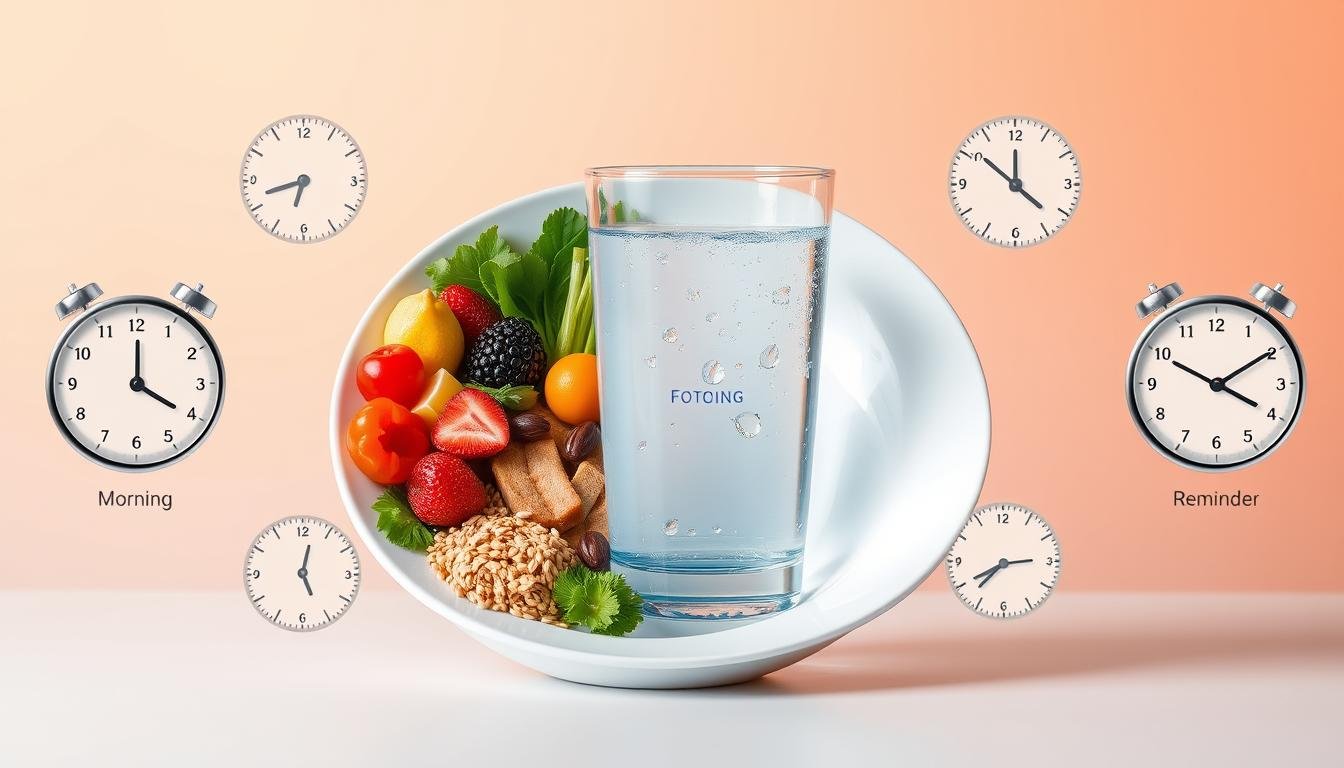
With a bit of effort and time, you can build healthy habits. Start with small changes and work towards a more balanced life.
| Time of Day | Recommended Action |
|---|---|
| Upon waking up | Drink water to rehydrate |
| Before meals | Drink water to aid in digestion |
| Every 3-4 hours | Eat a balanced meal or snack |
Common Mistakes in Diet and Hydration
Making smart choices about what we eat and drink is key to staying healthy. But, many of us make diet and hydration mistakes without realizing it. Knowing these common errors can help us avoid them and adopt better habits.
Getting the timing right for our nutrients is also important. Eating the right foods at the right time boosts our energy and helps with weight management. But, eating at the wrong time can cause stomach problems and lower energy levels.
Over-hydration Risks
Drinking too much water can lead to water poisoning, which is serious. It can cause seizures and even death. It’s important to watch how much water we drink, especially when we’re very active.
Under-eating Consequences
Eating too little can cause nutrient deficiencies and weaken our immune system. It’s crucial to eat a balanced diet with lots of whole foods to get all the nutrients we need.
Nutrient Timing Errors
Eating big meals close to bedtime can mess up our digestion and sleep. It’s best to stop eating 2-3 hours before bed to ensure a good night’s sleep.
Avoiding common diet, hydration, and nutrient timing mistakes can greatly improve our health. By knowing these pitfalls, we can make better choices and develop healthier habits.
| Mistake | Consequence | Prevention |
|---|---|---|
| Over-hydration | Water poisoning, seizures, death | Monitor water intake, especially during physical activities |
| Under-eating | Nutrient deficiencies, decreased energy, weakened immune system | Consume a balanced diet with a variety of whole foods |
| Poor nutrient timing | Digestive issues, decreased energy, health problems | Eat balanced meals, avoid large meals before bedtime |
Creating Your Personal Nutrition Plan
To make a personal nutrition plan that fits you, think about your age, gender, how active you are, and any food limits or likes. This plan should match your dietary needs and health aims. Maybe you want to keep your weight, grow muscle, or have more energy.
A good personal nutrition plan has the right mix of carbs, proteins, and fats. Drinking lots of water is also key. Here are important things to think about when making your plan:
- Look at what you eat now and see what can be better
- Set goals you can reach and keep track of your progress
- Talk to a health expert or dietitian for advice that’s just for you
By taking these steps and thinking about your unique dietary needs, you can make a personal nutrition plan that helps you be your healthiest.
A great personal nutrition plan is one that fits your personal needs and goals. It should also be able to change with your life or tastes.
| Factor | Consideration |
|---|---|
| Age | Metabolic rate and nutritional needs change with age |
| Activity Level | More active individuals require more calories and nutrients |
| Dietary Restrictions | Consider any food allergies, intolerances, or preferences |
Special Considerations for Different Activities
Different activities and lifestyles need special nutrition plans. For those who exercise often, the right nutrition is key. It gives them the energy they need and helps their muscles heal. On the other hand, staying active all day requires a healthy diet plan.
People who don’t move much should eat balanced meals and healthy snacks. This helps them avoid eating too much or making bad food choices. Traveling also makes it hard to eat well. Here are some tips for eating healthy while traveling:
- Plan ahead and pack healthy snacks
- Choose restaurants that offer healthy options
- Stay hydrated by drinking plenty of water
By thinking about these special needs and planning well, people can eat healthy. This supports their health, no matter how active they are or where they are.
| Activity | Nutritional Considerations |
|---|---|
| Exercise | Carbohydrates for energy, protein for muscle repair |
| Sedentary lifestyle | Balanced meals, healthy snacks, portion control |
| Travel | Plan ahead, choose healthy options, stay hydrated |
Seasonal Adjustments to Food and Water Needs
As seasons change, our bodies need different seasonal nutrition to stay healthy. In warmer months, we lose more water through sweat. To stay hydrated, eat more water-rich foods like fruits and veggies. Also, drink lots of water all day.
In colder weather, we need more calories to stay warm and energized. Eating seasonal foods helps us get the nutrients we need. It also supports local farmers. Some seasonal foods include:
- Winter: root vegetables, such as carrots and sweet potatoes
- Spring: leafy greens, such as spinach and kale
- Summer: fruits, such as strawberries and blueberries
- Autumn: squash, such as pumpkin and butternut squash
By adjusting our hydration and eating seasonal foods, we can stay healthy all year. Small changes can make a big difference in our health.
Being mindful of what we eat and drink helps us stay healthy. Adding seasonal foods and adjusting our hydration for the weather are good steps. Every little change helps.
| Season | Recommended Foods | Hydration Tips |
|---|---|---|
| Winter | Root vegetables, such as carrots and sweet potatoes | Drink warm beverages, such as tea or broth, to help stay hydrated |
| Spring | Leafy greens, such as spinach and kale | Increase water intake to account for increased physical activity |
| Summer | Fruits, such as strawberries and blueberries | Drink plenty of water throughout the day to stay hydrated |
| Autumn | Squash, such as pumpkin and butternut squash | Drink warm beverages, such as apple cider, to help stay hydrated |
Monitoring Your Progress and Making Adjustments
Working towards your dietary and hydration goals means tracking your progress. Use tools like nutrition apps to log your food and water. These apps also track your physical activity and health.
Popular methods for tracking include food diaries, mobile apps, and fitness trackers. These tools help spot patterns in your behavior. They make it easier to make smart diet and hydration choices. Also, watch out for health warnings like big weight changes or digestive issues.
There are many nutrition apps out there, each with special features. MyFitnessPal, Lose It!, and MyNetDiary are some popular ones. They help you track your daily intake and offer tips for improvement. By keeping an eye on your progress and adjusting as needed, you can reach your goals.
Don’t ignore health warnings that suggest you need expert advice. This includes big weight changes, digestive problems, or nutrient shortages. If you notice these signs, talk to a healthcare pro or a registered dietitian for help.
Conclusion: Building Sustainable Health Habits
Starting your journey to better health is exciting. Remember, lasting success comes from building sustainable habits. Changing your diet and staying hydrated might feel tough at first. But with time, these habits will become easy.
Keep up with new nutrition studies and set achievable goals. Don’t hesitate to ask for help from doctors or health groups. Eating right and drinking enough water boosts your energy and health.
Adopting a holistic approach to health is key. This way, you’ll create a lifestyle that benefits you for many years. Start now and watch your health flourish.


Leave a Reply