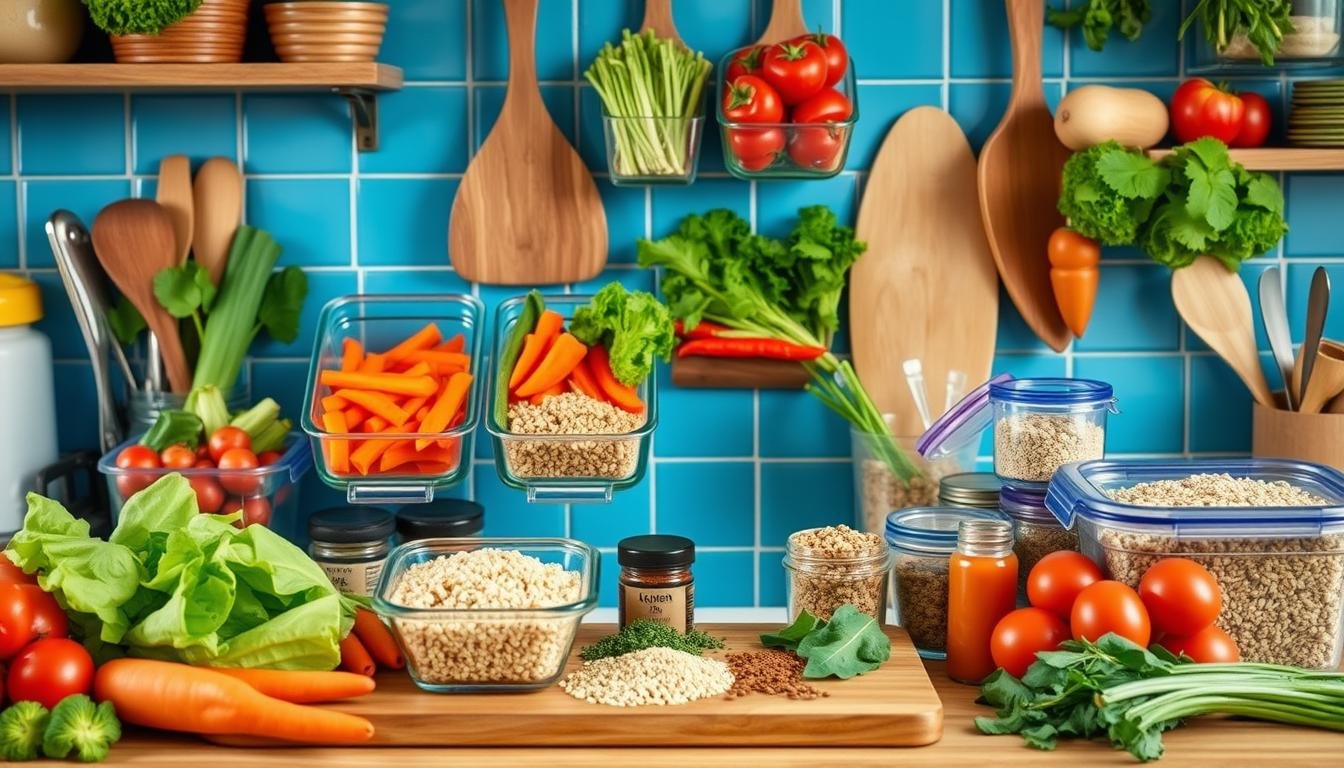
Starting with gluten-free meal planning can seem daunting. With more Americans choosing this diet, it’s becoming more common. About 20 million people in the U.S. follow a gluten-free diet for health reasons.
Reducing gluten in meal prep is not just a trend. It’s a smart way to eat healthier. The gluten-free food market is also growing fast, expected to hit USD 5.6 billion by 2025.
Many people pick gluten-free foods for their health benefits. Whether you have celiac disease or just want a healthier diet, meal planning can change how you eat.
Batch cooking is a great way to prep gluten-free meals. It can cut down prep time by up to 30%. With the right techniques, you can make tasty gluten-free dishes easily and efficiently.
Key Takeaways
- 20 million Americans follow a gluten-free diet
- Batch cooking can reduce prep time by 30%
- Gluten-free market expected to reach $5.6 billion by 2025
- 79% choose gluten-free for health benefits
- Meal planning can simplify gluten-free eating
Understanding the Benefits of Gluten-Free Meal Preparation
Dealing with dietary restrictions can be tough. But, gluten-free meal prep is a smart way to eat healthy. It helps those with gluten sensitivity or celiac disease get the nutrients they need.
A 2022 study in the Journal of Nutritional Biochemistry found gluten can harm sensitive people’s guts. This makes planning meals very important for those with dietary issues.
Health Advantages of Reducing Gluten Intake
Eating less gluten has many health benefits. These include:
- Less gut inflammation
- Better digestive health
- Relief from digestive problems
“Meal prep can transform your approach to gluten-free living, providing control and confidence in your nutrition.” – Nutrition Expert
Cost-Effective Meal Planning Solutions
Gluten-free foods can be pricey. But, smart meal prep can save money. Here are some tips:
- Buy ingredients in bulk
- Prepare meals ahead of time
- Use whole foods instead of processed ones
| Product Type | Regular Price | Gluten-Free Price | Price Difference |
|---|---|---|---|
| Pasta | $2.50 | $6.75 | 170% increase |
| Bread | $3.00 | $13.80 | 360% increase |
Time-Saving Benefits of Advance Preparation
Meal prep saves time and reduces stress for those with dietary needs. Spending a few hours each week can lead to healthy, safe meals.
The gluten-free market is growing fast, with a 10% annual increase in the U.S. Smart meal prep helps you stick to your diet while enjoying tasty, healthy meals.
Essential Kitchen Tools and Storage Containers for Gluten-Free Prep

Having a safe and organized kitchen is key for making gluten-free meals. It helps avoid cross-contamination and keeps those with gluten sensitivities healthy.
“As little as 1/64 of a teaspoon of gluten can trigger small intestinal inflammation in individuals with celiac disease.”
Here are the must-have tools and storage ideas for a gluten-free kitchen:
- Color-coded utensils to keep gluten-free and gluten-containing items separate
- Dedicated gluten-free cooking appliances like toasters and cutting boards
- High-quality storage containers with special features
When picking meal prep containers, look for these important features:
- Leak-proof and air-tight designs
- Safe materials (BPA-free options)
- The right size for different meals
Glass and ceramic containers are best for avoiding cross-contamination. They’re durable and safe for high heat, making them great for gluten-free meals. Containers that hold 24-30 ounces are usually the right size for most meals.
Pro Tip: Store gluten-free foods on the highest kitchen shelf to minimize contamination risk.
Quality kitchen tools make meal prep easier and give peace of mind to those with gluten sensitivities.
Top 10 Gluten-Free Ingredients for Meal Prep Success
Creating healthy meals starts with picking the right ingredients, even more so for those on a gluten-free diet. Knowing the best flour substitutes and protein sources can make meal prep easier and more enjoyable.
Choosing the right ingredients is key for a gluten-free diet. It ensures your meals are not only tasty but also nutritious. With about 6% of Americans dealing with gluten sensitivity, picking the right ingredients is more important than ever.
Protein Sources and Alternatives
- Chicken: A versatile, lean protein source
- Eggs: High in protein and easy to prepare
- Tofu: Plant-based protein option
- Lentils: Nutrient-dense legume alternative
- Shrimp: Quick-cooking seafood protein
Grain-Free Substitutes
- Quinoa: Complete protein grain alternative
- Cauliflower rice: Low-carb replacement
- Zucchini noodles: Vegetable-based pasta substitute
| Ingredient | Protein (g) | Calories |
|---|---|---|
| Chicken Breast | 31 | 165 |
| Quinoa | 8 | 222 |
| Lentils | 18 | 230 |
Fresh Produce Selection
Adding a variety of colorful vegetables to your meals is essential. Berries, leafy greens, and seasonal veggies are packed with nutrients. They make your meals not only healthy but also exciting and gluten-free.
A well-planned gluten-free diet can provide all necessary nutrients while offering delicious, diverse meal options.
By carefully choosing these ingredients, you’ll make alternative flour substitutes and nutritious meal ideas. These will meet your dietary needs and taste preferences.
Reducing Gluten in Meal Prep: Practical Strategies

Reducing gluten in meal prep might seem hard, but it’s doable. With the right tips, you can make tasty meals that are safe for those with allergies. About 30% of people are now trying to eat less gluten, showing it’s a popular choice.
“Meal prep is about making healthy eating easier, not more complicated.” – Nutrition Expert
Here are some easy ways to make gluten-free meals:
- Read food labels carefully to identify hidden gluten sources
- Choose naturally gluten-free whole foods
- Invest in dedicated gluten-free cooking tools
- Batch cook versatile gluten-free staples
Knowing how to swap out ingredients is key for gluten-free meal prep. Here are some good swaps:
| Gluten-Containing Ingredient | Gluten-Free Alternative |
|---|---|
| Wheat flour | Almond flour |
| Soy sauce | Tamari sauce |
| Regular pasta | Chickpea or rice pasta |
Pro tip: Even a short meal prep session can make a big difference in reducing gluten. With 1 in 100 people worldwide having celiac disease, these tips are vital for a healthy diet.
By using these strategies, you can make tasty, healthy meals with less gluten. The aim is not just to cut out gluten but to find tasty, nutritious alternatives that boost your health and well-being.
Cross-Contamination Prevention and Kitchen Organization
To keep your gluten-free meals safe, you need a well-organized kitchen and careful steps to avoid cross-contamination. About 7-8% of people have gluten-related disorders. So, it’s key to know how to prepare food safely.

Creating a gluten-free kitchen is all about strategy. Organizing your kitchen well helps prevent gluten exposure when you cook.
Safe Food Storage Methods
- Use color-coded containers for gluten-free ingredients
- Label all gluten-free items clearly
- Store gluten-free products separately from gluten-containing foods
- Implement dedicated shelf spaces for gluten-free products
Cleaning and Preparation Protocols
Good cross-contamination prevention means strict cleaning. Studies show that even a tiny bit of gluten, 20 parts per million, can cause problems for some people.
| Kitchen Area | Cleaning Strategy |
|---|---|
| Countertops | Wash with hot soapy water, follow with disinfectant wipes |
| Cooking Utensils | Use separate sets for gluten-free cooking |
| Toasters | Dedicated gluten-free toaster recommended |
“Preventing cross-contamination is not just a choice, it’s a necessity for those with gluten sensitivities.”
By following these kitchen organization tips, you can greatly lower the chance of gluten exposure. This makes meal prep safer and healthier for everyone.
Quick and Easy Gluten-Free Recipe Ideas
Discovering tasty gluten-free recipes can change how you plan meals. Our selection of gluten-free recipes has something for everyone. They are easy to make and full of flavor.
Let’s look at some gluten-free recipe ideas that make meal prep easy:
- Breakfast Egg Cups: A game-changing option that improves breakfast convenience for 80% of meal preppers
- Chicken Tinga with freezing potential that allows storage of up to 50% of the preparation
- One Skillet Moroccan-Style Peanut Butter Chickpeas – reducing kitchen cleanup time by approximately 50%
- Vegetarian Shepherd’s Lentil Pie with less than 20% food waste
“Meal prep isn’t about perfection, it’s about making healthy eating easier and more enjoyable.”
Looking for low-carb options? Here are some gluten-free meal ideas:
- Spaghetti squash boats replacing traditional pizza dough
- Roasted cauliflower bowls with cheese, bacon, and scallions
- Vegetarian quesadillas using poblano and bell peppers
- Sweet potato and chipotle pepper chili
Pro tip: Many of these recipes can be prepared in just 20-30 minutes. They’re great for those with busy lives who want to eat healthy.
Adding these gluten-free recipes to your meal prep will give you a variety of tasty meals. They support your dietary goals without losing flavor or nutrition.
Batch Cooking Methods for Gluten-Free Meals
Planning meals for a gluten-free diet can be easier with batch cooking. The gluten-free market is growing fast, reaching $4.43 billion in 2022. This shows how important it is to cook meals efficiently for those with dietary needs.
Batch cooking helps keep eating habits healthy, which is great for those who must avoid gluten. About 20% of people use batch cooking to save time and reduce stress. It makes meal prep simpler.
Make-Ahead Breakfast Solutions
Breakfast can be easier to prepare with these make-ahead ideas:
- Overnight quinoa parfaits
- Gluten-free chia seed puddings
- Freezer-friendly egg muffins
- Protein-packed smoothie packs
Lunch and Dinner Batch Cooking Strategies
Smart batch cooking can cut food waste by up to 25%. Here’s how to make versatile gluten-free meals:
| Protein Source | Preparation Method | Storage Duration |
|---|---|---|
| Grilled Chicken | Bulk cooking | 4-5 days refrigerated |
| Roasted Vegetables | Sheet pan preparation | 3-4 days refrigerated |
| Quinoa | Large batch cooking | 5-7 days refrigerated |
“Batch cooking transforms meal preparation from a daily challenge to a strategic, time-saving approach.” – Gluten-Free Nutrition Expert
Spending just two to three hours a week on meal prep can lead to a variety of gluten-free meals. The trick is to be versatile and choose ingredients wisely.
With 35% of people adding gluten-free options to their diet, batch cooking is a smart way to keep up with dietary needs. It helps manage time and nutrition well.
Weekly Meal Planning Templates and Shopping Lists
Creating a meal plan for dietary restrictions needs careful planning and preparation. A good meal plan can make gluten-free cooking easier and less stressful.
“Preparation is the key to successful meal planning, even with dietary restrictions.”
To make a detailed weekly meal plan, follow these steps:
- Check your nutritional needs
- Pick gluten-free recipes
- Make ingredient lists
- Get your shopping list ready
Here are some tips to make meal planning easier:
| Planning Stage | Key Actions | Time Investment |
|---|---|---|
| Recipe Selection | Choose 7-day gluten-free meal plan recipes | 1-2 hours |
| Ingredient Mapping | Create detailed grocery list | 30-45 minutes |
| Prep Schedule | Batch cook and portion meals | 2-3 hours |
When making your meal plan, choose nutrient-dense ingredients like gluten-free oats and whole grains. This ensures you get balanced nutrition while sticking to your diet.
Good tips for meal planning include cooking big batches for leftovers. Also, use versatile ingredients and make a flexible plan that allows for spontaneity.
Conclusion
Reducing gluten in meal prep is easier than you think. This guide shows how to make tasty, healthy gluten-free meals. With only 1% of the world affected by Celiac disease, many are finding gluten-free cooking great.
Starting healthy eating is simple. Start by prepping a few ingredients and learn more about meal prep. The FDA’s rules on gluten-free foods (less than 20 parts per million) help you choose wisely. Use rice flour, corn starch, and other gluten-free options to make meals that are both tasty and nutritious.
Your meal prep journey is unique, and it’s okay if it’s not perfect. The demand for gluten-free products is rising, giving you more chances to get creative in the kitchen. By using the tips from this guide, you’ll make better food choices and feel more confident in your cooking.
Keep exploring, trying new recipes, and enjoying the journey of finding gluten-free foods. Your effort to reduce gluten in meal prep can boost your health, energy, and make eating more fun.


Leave a Reply