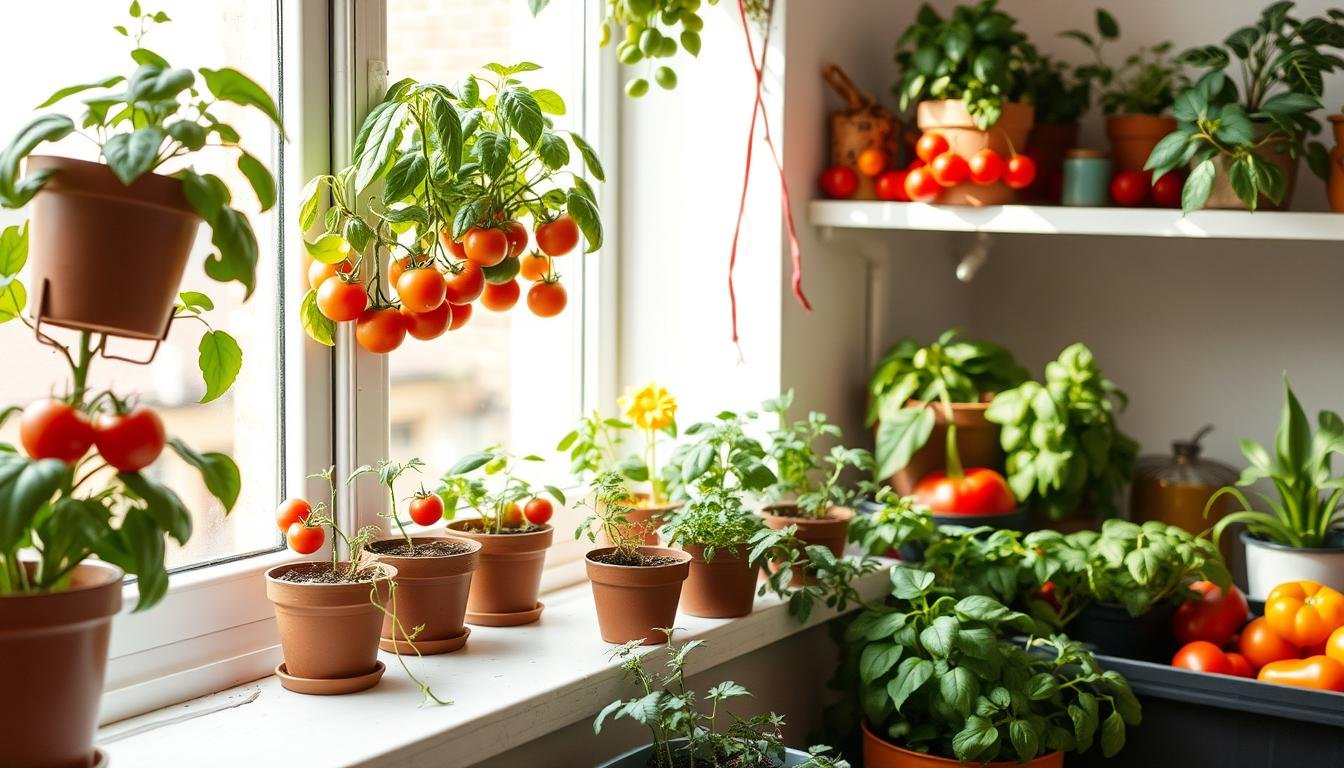
Do you dream of growing your own veggies but don’t have outdoor space? An indoor garden might be just what you need. It’s a great way for city folks and gardening fans to grow food all year.
Indoor gardens are more than just a place to grow food. They’re a fun, green hobby that makes your home better. You can grow everything from lettuce to tomatoes indoors.
Picture this: picking fresh spinach for your salad or picking ripe tomatoes without leaving your house. This guide will show you how to start your indoor garden. It’s easy and fun for anyone.
Key Takeaways
- Indoor vegetable gardening is accessible to beginners
- Fresh produce can be grown year-round in your home
- Minimal space is required for a successful indoor garden
- Various vegetables can thrive in indoor environments
- Proper lighting and care are crucial for indoor crop success
Why Growing Vegetables Indoors is Worth It
Indoor gardening has changed how we get fresh produce. It lets us grow vegetables all year, right at home. It’s more than just having fresh greens nearby.
Year-Round Fresh Produce
Imagine picking crisp lettuce or fresh herbs in winter! Indoor gardening means no more seasonal limits. You get:
- Constant access to fresh veggies
- Nutritious homegrown food
- Freedom from store hours
Cost Savings on Groceries
Indoor gardening can cut down your grocery bills. Here’s how you can save:
- Low start-up costs for supplies
- Fewer trips to the store
- Up to 30% less on produce
“An indoor garden is like a personal grocery store that never closes!” – Urban Gardening Enthusiast
Complete Growing Condition Control
Indoor gardening lets you control your plants’ environment. You can adjust:
- Temperature (best range: 60-70°F)
- Light (12-16 hours a day)
- Humidity
- Protection from pests
With just a few hours of care each week, you can have fresh, nutritious veggies from your indoor garden. It’s great for those who care about health and saving money.
Choosing the Perfect Location for Your Indoor Garden
Starting a successful indoor garden means picking the right spot. The location of your garden is key to plant health and growth. You want to create a space that helps your vegetables thrive.
When you garden indoors, you must think about a few important things. Where you put your garden can really affect how well your plants grow.
Light Requirements and Window Placement
Finding the perfect window for your garden is vital. Most plants love bright, indirect light. Here are some tips for choosing the right spot:
- South- or west-facing windows get the most natural light
- Make sure plants get 6-8 hours of direct sunlight each day
- Grow lights can help if natural light is scarce
Temperature Considerations
Keeping the temperature steady is crucial for your plants. Indoor veggies do best in certain temperature ranges:
| Time of Day | Optimal Temperature |
|---|---|
| Daytime | 65-75°F (18-24°C) |
| Nighttime | 55-65°F (13-18°C) |
“The secret to a thriving indoor garden is creating a stable, nurturing environment.” – Indoor Gardening Expert
Space Optimization Tips
Make the most of your indoor garden space with smart ideas:
- Try vertical gardening
- Install shelves near windows
- Choose compact containers
- Rotate plants for even light
Pro tip: Keep plants away from drafts and heat sources to prevent stress and damage.
Essential Equipment and Supplies List
Starting an indoor vegetable garden needs some key supplies and tools. The right gear can turn your home into a lush green space. It makes gardening fun and rewarding.
Here are the must-haves for every indoor gardener:
- Containers with Drainage Holes
- Plastic pots
- Clay containers
- Self-watering planters
- Soil and Growing Media
- High-quality potting mix
- Seed starting mix
- Organic compost
- Lighting Equipment
- LED grow lights
- Adjustable light stands
- Timer for consistent light exposure
“The right tools can turn any space into a productive vegetable garden.” – Indoor Gardening Expert
Beginners should consider a seed starting kit. These kits have trays, lights, and heat mats for seed germination. Most seeds need 14-16 hours of bright light each day. So, good grow lights are key.
Save money by starting with basic tools. A small watering can, pruning shears, and plant labels are enough. You don’t need to spend a lot to grow tasty indoor veggies!
Indoor Vegetable Garden Beginners Guide
Starting an indoor garden can seem tough, but it’s doable with the right guide. Begin small and learn as you go.
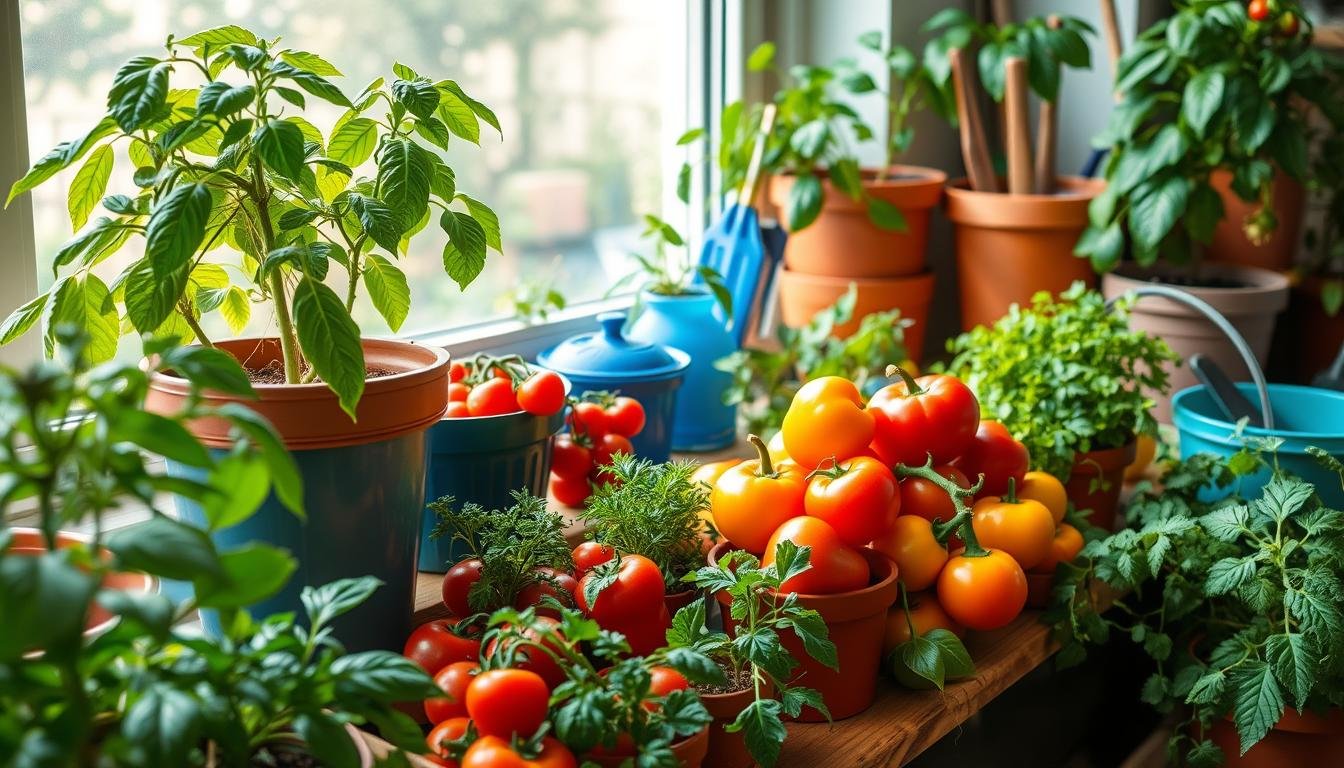
Essential Setup Instructions
Starting your first indoor garden needs careful planning. Here are key steps to begin:
- Select a bright location with consistent temperature
- Choose containers with proper drainage
- Prepare a nutrient-rich soil mixture (1:1:1 ratio of potting soil, coconut coir, and compost)
- Select beginner-friendly vegetables like lettuce, herbs, and cherry tomatoes
Common Mistakes to Avoid
New gardeners often face similar issues. Avoid these common mistakes:
- Overwatering: Most plants need little water
- Insufficient lighting: Aim for 15 hours of bright light daily
- Neglecting proper drainage
- Choosing inappropriate plant varieties for indoor conditions
Time Management for Indoor Gardening
Indoor gardening doesn’t need hours of daily work. Here’s a simple plan:
| Time Investment | Task | Frequency |
|---|---|---|
| 5-10 minutes | Watering | Every 2-3 days |
| 15 minutes | Monitoring plant health | Weekly |
| 30 minutes | Harvesting and maintenance | Bi-weekly |
“Gardening is about learning, growing, and enjoying the process. Start small and watch your skills bloom!” – Urban Gardening Expert
Remember, an indoor garden is a journey of discovery. With patience and care, you’ll soon enjoy fresh, homegrown veggies from your garden.
Best Vegetables to Grow Indoors
Starting an indoor vegetable garden is exciting. It lets you grow fresh produce at home. Whether you’re new or experienced, some plants can turn your home into a garden.
“Growing vegetables indoors is like having a mini-farm at your fingertips!” – Urban Gardening Expert
Some top indoor vegetables include:
- Leafy Greens (Spinach, Kale, Arugula)
Quick-growing and nutrient-dense - Herbs (Basil, Parsley, Chives)
Compact and flavorful - Cherry Tomatoes
Compact plants with bountiful harvests - Peppers (Sweet and Hot Varieties)
Versatile and colorful - Microgreens
Packed with nutrients
Light and temperature are key for indoor growing. Most need 6-8 hours of sunlight or grow light daily. The best temperature is between 60°F and 75°F for growth.
| Vegetable | Growth Time | Light Requirements | Container Depth |
|---|---|---|---|
| Leafy Greens | 4 weeks | 12 hours/day | 6-8 inches |
| Peppers | 60-90 days | 14-20 hours/day | 8-10 inches |
| Radishes | 30-45 days | 6-8 hours/day | 6 inches |
| Microgreens | 2-3 weeks | 12-16 hours/day | 2-4 inches |
For beginners, start with herbs and leafy greens. As you get better, try harder vegetables. Remember, patience and care are essential for a great indoor garden.
Lighting Solutions for Indoor Gardens
Indoor garden lighting is key when natural sunlight is scarce. The right light setup can turn your indoor gardening into a success.
Vegetables need lots of light to grow well. Most need 14-16 hours of artificial light each day. The right grow lights can greatly improve your indoor garden’s output.
Natural vs Artificial Light
Natural sunlight is best, but indoor spaces often don’t get enough. Grow lights offer a steady, controlled light that’s like natural sunlight.
- Windowsills support low-light plants
- High-light vegetables need dedicated grow lights
- LED lights offer energy-efficient alternatives
Types of Grow Lights
There are many indoor garden lighting options for different needs and budgets:
- LED Grow Lights
- Energy-efficient
- Low heat generation
- Adjustable light spectrum
- Fluorescent Lights
- Budget-friendly
- Good for leafy greens
- Lower light intensity
Light Scheduling Basics
Setting up a light schedule is vital for vegetable growth. Most indoor veggies need 12-16 hours of light daily, based on the plant type.
“The right light can transform your indoor garden from surviving to thriving.” – Indoor Gardening Expert
Get a light timer for consistent light. Remember, seedlings usually need 16-18 hours of light for best germination.
Soil and Container Requirements
Container gardening lets you grow veggies in small spaces. The right soil and containers are key for a successful indoor garden.
Choosing the right containers and soil is vital. Not all soil is created equal – garden soil won’t work for container gardening.
- Select containers with proper drainage holes
- Use specialized indoor potting soil mixes
- Match container size to vegetable type
Container size is important for different veggies. Here’s a quick guide to help you choose the right containers:
| Vegetable Type | Recommended Container Size |
|---|---|
| Herbs and Radishes | 1-gallon container |
| Lettuce, Beets, Carrots | 3-gallon container |
| Tomatoes, Peppers, Eggplant | 5-gallon container |
“The secret to successful indoor vegetable gardening is creating the right environment from the ground up.”
When picking indoor potting soil, choose lightweight, well-draining mixes. These prevent waterlogging and give your veggies the nutrients they need. Don’t use garden soil, as it can compact and bring diseases to your garden.
Pro tip: Most veggies need at least 12 inches of soil for healthy roots. Make sure your containers have enough drainage holes. Smaller pots need 3 to 6 holes, while larger ones need 6 to 8.
Watering and Humidity Management
Creating the perfect environment for indoor vegetable gardens is key. You need to focus on watering and managing humidity. The right moisture balance is crucial for your plants to thrive.
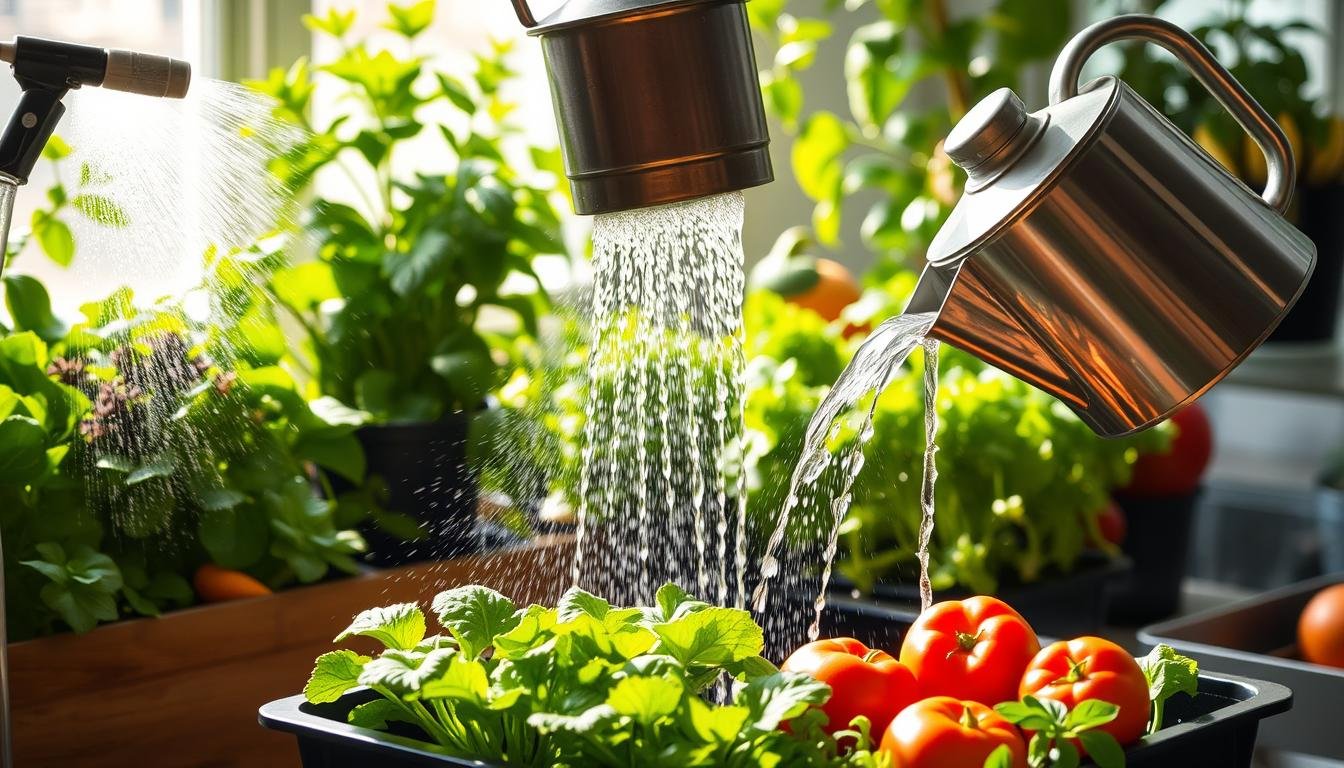
Learning how to water your indoor plants is essential. Most plants need consistent moisture. But, too much water can harm them just as much as too little.
Proper Watering Techniques
- Check soil moisture by touching the top inch – water when it feels dry
- Use room temperature water to prevent plant shock
- Water at the base of plants to avoid leaf damage
- Drain excess water from plant saucers to prevent root rot
Humidity Control for Indoor Gardens
Keeping the right humidity is vital for your plants. Most indoor veggies do best in humidity levels of 60%-80%.
| Plant Type | Ideal Humidity Range | Moisture Management Tip |
|---|---|---|
| Leafy Greens | 60-70% | Use spray bottle for light misting |
| Peppers | 70-80% | Place water tray near plants |
| Herbs | 50-60% | Group plants to increase ambient humidity |
Common Moisture Problems
“Understanding your plants’ water needs is the key to a successful indoor garden.” – Indoor Gardening Expert
Watch out for these moisture issues:
- Yellowing leaves (potential overwatering)
- Crispy leaf edges (low humidity)
- Wilting despite wet soil (root rot)
- White crusty residue on soil (mineral buildup)
Pro tip: Use a humidity meter to track moisture levels and ensure your indoor garden remains in the optimal range for healthy vegetable growth.
Plant Nutrition and Fertilizing Tips
Proper nutrition is key for a thriving indoor vegetable garden. Knowing what your plants need helps them grow well. Indoor plant fertilizer is important for giving plants the nutrients they might not get from the soil.
“A well-fed plant is a happy plant!” – Gardening Wisdom
Choosing the right fertilizer is important. Vegetables need different nutrients at different times. The N-P-K ratio on fertilizer packages tells you what nutrients are in it.
Essential Fertilizer Tips
- Choose a balanced, water-soluble fertilizer designed for vegetables
- Apply fertilizer every 3-4 weeks during active growth
- Avoid over-fertilizing, which can damage plant roots
Nutrient Requirements by Growth Stage
| Growth Stage | Nutrient Focus | Fertilizer Type |
|---|---|---|
| Seedling | Balanced nutrition | Low-strength, balanced fertilizer |
| Flowering | Phosphorus boost | Lower nitrogen, higher phosphorus |
| Fruit Production | Potassium emphasis | Potassium-rich fertilizer |
Pro tip: Spring is the best time to fertilize, mixing nutrients into the soil before planting. For indoor gardens, prepare your containers with nutrient-rich potting mix before adding seedlings.
Look out for signs of nutrient deficiencies like yellow leaves or slow growth. Regular soil tests help keep nutrient levels right and prevent problems in your indoor garden.
Pest Prevention and Control
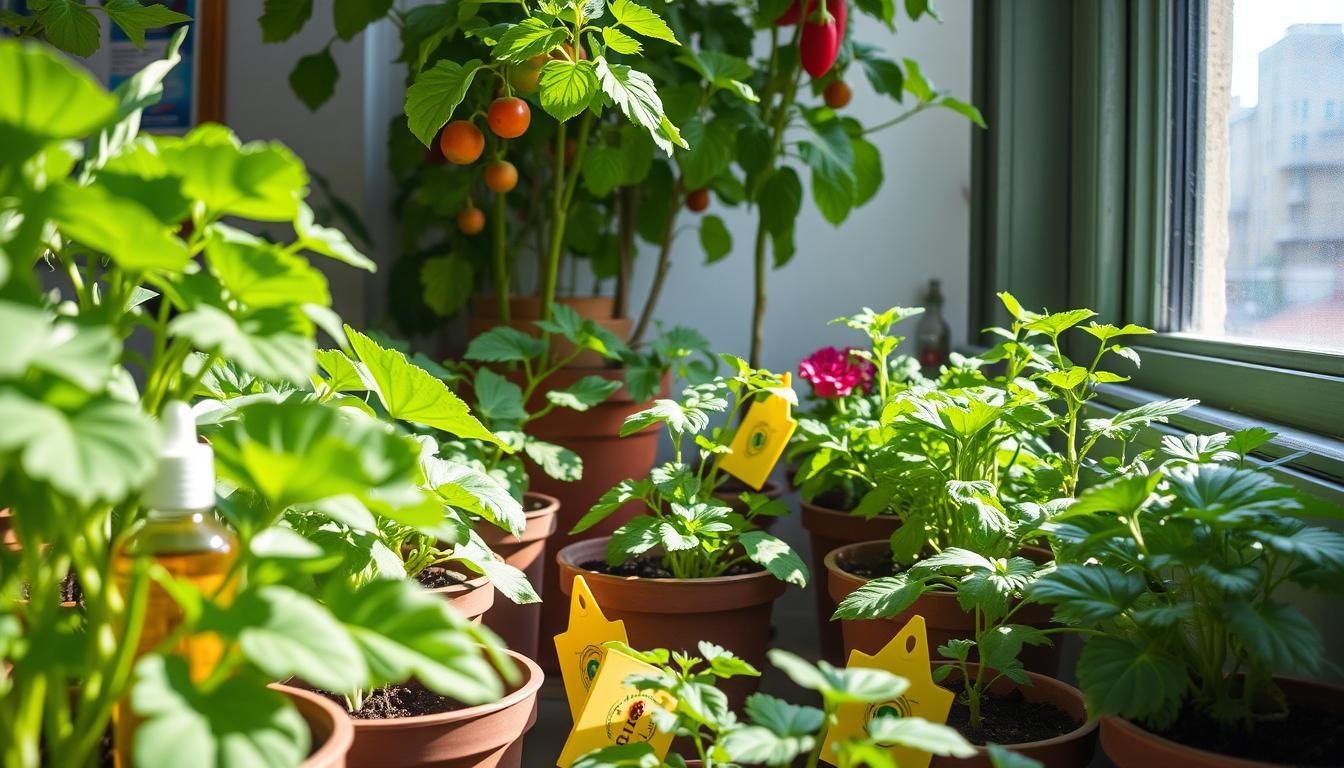
Managing indoor garden pests needs a proactive plan. Indoor vegetable gardens can attract unwanted visitors. But, with the right organic pest control, you can keep your plants healthy and thriving.
Common indoor garden pests include:
- Aphids
- Fungus gnats
- Spider mites
- Whiteflies
- Mealybugs
Prevention is crucial in organic pest control. Regularly check your plants to catch infestations early. Maintaining plant health reduces vulnerability to pest attacks.
| Pest | Organic Control Method |
|---|---|
| Aphids | Neem oil spray |
| Spider Mites | Insecticidal soap |
| Fungus Gnats | Diatomaceous earth |
Natural remedies can manage indoor garden pests without harsh chemicals. Diatomaceous earth kills soft-bodied insects. Beneficial bacteria solutions control pests safely.
A healthy garden is the best defense against pests.
Use integrated pest management techniques like crop rotation and proper sanitation. Also, keep your plants in the best conditions. This will greatly reduce pest infestations in your indoor garden.
Harvesting and Maintaining Your Indoor Garden
To make your indoor vegetable garden grow well, you need to harvest and maintain it carefully. Your homegrown food will thank you for the extra effort and smart methods.
Perfect Harvest Timing
Knowing when to pick your vegetables is key. Each type has its own sign of readiness:
- Leafy greens like spinach are ready when leaves are 4-6 inches long
- Radishes take about three weeks to grow
- Herbs taste best when picked before they flower
Expert Pruning Strategies
Pruning is important for your garden’s health. Trimming wisely helps plants grow bushy and not too tall. Cut off dead or yellow leaves and trim the main stems to encourage more growth.
Succession Planting Techniques
Succession planting keeps your garden full of fresh veggies. Planting every 2-3 weeks keeps your harvest going all year.
“The secret to a productive indoor garden is consistent care and strategic planning.” – Urban Gardening Experts
By using these harvesting and maintenance tips, your indoor garden will flourish. It will give you fresh, healthy veggies all year long.
Conclusion
Starting an indoor vegetable garden opens up a world of delicious possibilities. Over 30% of U.S. households now garden indoors. You’re joining a growing community of home gardeners who enjoy the benefits.
Your journey starts with patience, learning, and a willingness to try new things. This is key to your success as a beginner gardener.
Indoor gardening offers more than just fresh veggies. It can save you $150-$200 a year on groceries. Plus, it gives you access to nutritious veggies all year round.
About 70% of gardeners say it improves their mental health. It’s not just about growing food; it’s a way to connect with nature and relax.
Every small step in indoor gardening is important. Whether it’s herbs on a windowsill or a full shelving system with grow lights, it’s a sustainable choice. It reduces your carbon footprint and lets you control your food production.
By making this choice, you’re positively impacting your health and the environment. Embrace the journey, learn from your experiences, and enjoy the fresh, homegrown veggies you’ll soon harvest.
Your indoor gardening adventure is just starting. With the right knowledge, tools, and enthusiasm, you’ll turn your living space into a thriving vegetable oasis. Start small, stay curious, and watch your garden – and your skills – grow.


Leave a Reply