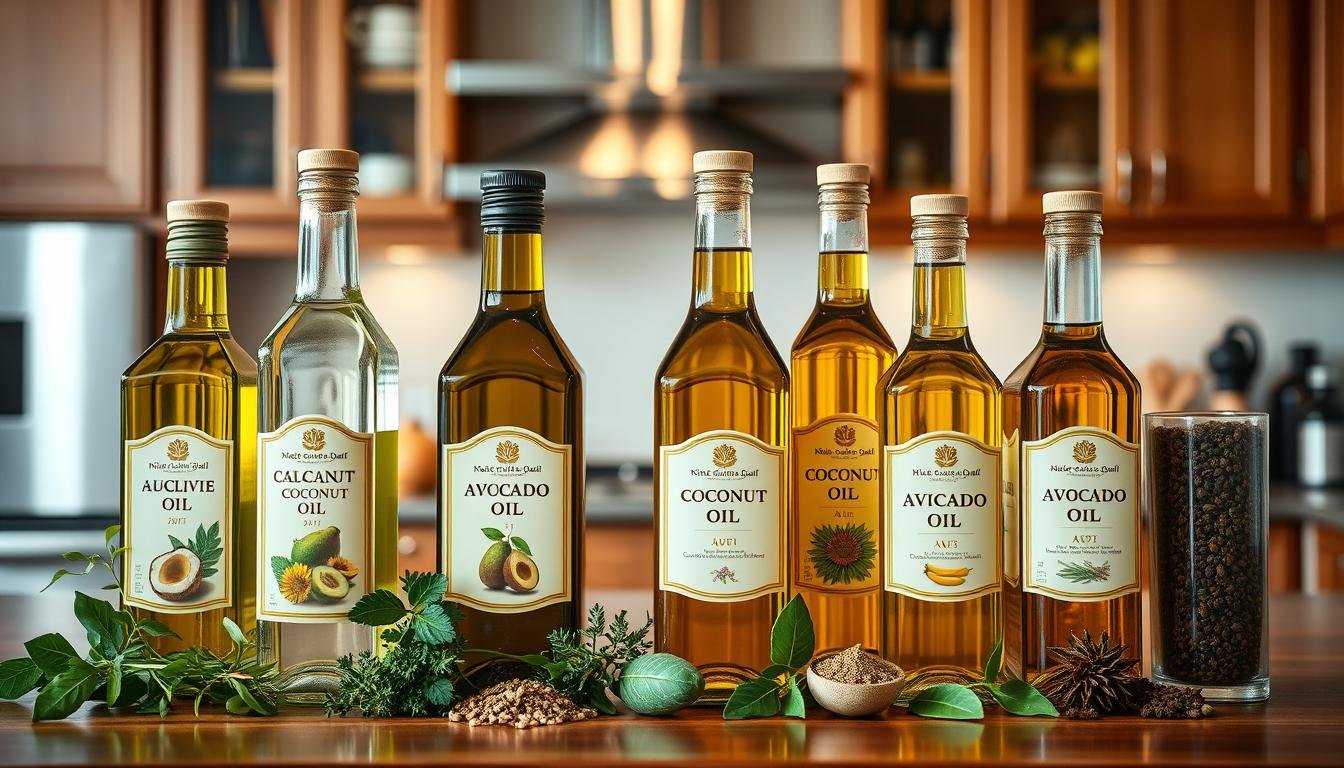
Ever thought about how the right cooking oil could boost your cooking skills? Choosing the right oil can change how your food tastes, how healthy it is, and how well it cooks.
Cooking oil is more than just a tool for cooking. Each type has its own special qualities, health perks, and cooking possibilities. Knowing about different cooking oils can make your meals better and help you eat healthier.
Finding the perfect cooking oil is not just about taste. It’s about unlocking the full flavor of every dish. Whether you’re searing meat or making salad dressing, the right oil can make a big difference in your kitchen.
Key Takeaways
- Different cooking oils have unique smoke points and flavor profiles
- Nutritional content varies significantly between oil types
- Cooking method determines the most appropriate oil selection
- Health considerations are crucial when choosing cooking oils
- Proper storage extends the shelf life of cooking oils
Understanding Different Types of Cooking Oils
Cooking oils vary greatly. Each type affects flavor, nutrition, and how well it cooks. Exploring olive oil, vegetable oil, and other oils shows interesting differences in how they are made and used.
Plant-Based vs Animal-Based Oils
Cooking oils come from two main sources:
- Plant-Based Oils: Made from seeds, nuts, and fruits
- Olive oil
- Vegetable oil
- Coconut oil
- Avocado oil
- Animal-Based Fats: From animals
- Butter
- Lard
- Ghee
Refined vs Unrefined Oils
How an oil is processed changes its quality and taste:
- Refined Oils
- Last longer
- Can handle high heat
- Taste neutral
- Cost less
- Unrefined Oils
- More nutrients
- Stronger taste
- Can’t handle high heat
- Cost more
The Role of Smoke Points
Smoke points tell us when to use an oil. For example, extra virgin olive oil is best for low heat, while refined avocado oil can handle high heat.
“Knowing an oil’s smoke point is key to keeping flavor and avoiding harmful changes when cooking.”
| Oil Type | Smoke Point | Best Use |
|---|---|---|
| Extra Virgin Olive Oil | 375°F | Low-heat cooking, dressings |
| Refined Avocado Oil | 520°F | High-heat cooking, searing |
| Unrefined Coconut Oil | 350°F | Baking, medium-heat cooking |
The Science Behind Cooking Oil Fats
To understand cooking oils, we must look at their fat makeup. Triacylglycerols, the main lipids in food, shape cooking oils. They are key to their nutritional value.
- Saturated Fats: Typically solid at room temperature, found in coconut and palm oils
- Monounsaturated Fats: Liquid at room temperature, prominent in olive oil
- Polyunsaturated Fats: Remain liquid, common in vegetable and canola oils
Different fats affect health in various ways. Saturated fats might increase LDL cholesterol. But unsaturated fats could help keep your heart healthy.
| Oil Type | Total Fat | Saturated Fat | Monounsaturated Fat | Polyunsaturated Fat |
|---|---|---|---|---|
| Olive Oil | 14 g | 2.17 g | 9.58 g | 1.33 g |
| Canola Oil | 14 g | 0.93 g | 8.76 g | 3.54 g |
| Coconut Oil | 14 g | 11.6 g | 0.88 g | 0.24 g |
“Not all fats are created equal” – Nutritional Science Insight
It’s important to know about trans fats, which are harmful. Opting for oils rich in unsaturated fats can boost your health and well-being.
Essential Olive Oil Varieties
Olive oil is a key ingredient in cooking, known for its flavors and health benefits. It makes simple dishes into something special. You can find it in kitchens and fancy restaurants.
Olive oil comes in many types, each with its own taste. Knowing about these can make your cooking better and healthier.
Extra Virgin Olive Oil: The Gold Standard
Extra virgin olive oil (EVOO) is the best quality. It has very low acidity, making it very healthy:
- It’s full of oleic acid, which fights inflammation
- It lowers bad cholesterol and raises good cholesterol
- It might lower stroke risk and protect the heart
- It helps control blood sugar
Light vs Regular Olive Oil: Understanding the Differences
“Light” olive oil doesn’t mean it’s low in calories. It just means it tastes milder. Here’s how they compare:
| Olive Oil Type | Composition | Best Uses |
|---|---|---|
| Pure Olive Oil | 15-20% virgin oil blended with refined oils | High-heat cooking |
| Light Olive Oil | Blended oil with mild flavor | Baking, neutral-tasting dishes |
| Extra Virgin Olive Oil | Highest quality, minimal processing | Dressings, dips, finishing dishes |
Best Uses and Applications
Choosing the right olive oil can change your cooking. Extra virgin olive oil is great for salads. Lighter oils are better for cooking at high heat.
“Quality olive oils often come from single estate origins, ensuring pure, authentic flavors.” – Culinary Expert
Tip: Keep your olive oil in a cool, dark spot. This keeps it fresh and stops it from getting rancid.
Coconut Oil: Versatility in Kitchen

Coconut oil has become a star in kitchens everywhere. It’s known for its special qualities and many uses. This oil is special because it changes state with temperature.
Virgin coconut oils are top-notch, with richer flavors that make food taste better. It’s great for many things in the kitchen:
- Baking delectable pastries
- Sautéing vegetables
- Creating smooth salad dressings
- Preparing exotic marinades
Knowing how coconut oil works helps cooks use it best. It melts at temperatures over 76 degrees Fahrenheit. This makes it useful in both solid and liquid forms.
| Coconut Oil Type | Best Culinary Uses | Temperature Characteristics |
|---|---|---|
| Unrefined Virgin | Baked goods, spreads | Retains complex flavor profile |
| Refined | Pan frying, salad drizzling | Milder taste, higher versatility |
“Coconut oil transforms cooking from ordinary to extraordinary with its rich nutritional profile and unique culinary characteristics.”
Coconut oil is also good for you. It’s mostly unsaturated fat, which might help your “good” cholesterol. It also helps your body absorb vitamins better.
Coconut oil is perfect for making vegan chocolate tarts or cooking collard greens. It’s a must-have in the kitchen for its flexibility and taste.
Canola Oil: The All-Purpose Option
Canola oil is a versatile and healthy choice for today’s kitchens. It comes from black canola plant seeds. This oil has a great nutritional profile, making it stand out among other oils.
Health Benefits and Composition
Canola oil is packed with nutritional benefits. Its composition is truly impressive:
- Contains just 7% saturated fat, the lowest among common culinary oils
- Rich in monounsaturated fats and omega-3 fatty acids
- Recognized by the U.S. Food and Drug Administration for potential heart health benefits
“Canola oil can help reduce LDL cholesterol levels by an average of 16.2% when replacing saturated fat diets.”
Cooking Applications
Canola oil is a kitchen superstar. It has a high smoke point of 468°F. This makes it great for:
- Sautéing vegetables
- Deep frying
- Baking
- Salad dressing
Storage Guidelines
Proper storage is crucial for canola oil’s quality. Store it in a cool, dark place. Use it within one year to avoid rancidity. Sealed containers away from sunlight will keep its nutrients intact.
| Storage Condition | Recommended Practice |
|---|---|
| Temperature | Room temperature, away from heat |
| Light Exposure | Minimal, store in dark cabinet |
| Container | Tightly sealed, opaque bottle |
Avocado Oil: The Premium Choice
Avocado oil is a top choice for cooking. It’s known for its great taste and health benefits. Both home cooks and chefs love it.
Avocado oil is special because of its high smoke point. It ranges from 350°F to 520°F, depending on how it’s refined. Refined avocado oil reaches up to 520°F. This makes it perfect for searing and grilling.
“Avocado oil isn’t just a cooking oil – it’s a nutritional powerhouse!” – Culinary Experts
- Contains 120-124 calories per tablespoon
- Provides 9.88 grams of monounsaturated fat per tablespoon
- Has only 1.5 to 2 grams of saturated fat per tablespoon
- Offers up to 2 grams of polyunsaturated fat per tablespoon
Avocado oil is good for your heart. It has lots of monounsaturated fats. These fats are healthy and give a mild, buttery taste to food.
A 2020 study found only two brands of refined avocado oil were pure. Chosen Foods and Marianne’s were the best choices for quality oil.
Remember, avocado oil’s shelf life depends on how it’s stored. Unrefined oil lasts 6-8 months after opening. Refined oil can last up to 12 months or more.
Exploring Specialty Oils
Specialty cooking oils add unique flavors and health benefits to dishes. They turn simple meals into works of art. Both professional chefs and home cooks love these oils for their special qualities and many uses.
Sesame Oil: An Asian Culinary Treasure
Sesame oil adds a strong, nutty taste to Asian dishes. Toasted sesame oil is loved for its deep, rich flavor. Just a little bit can make stir-fries, marinades, and dressings taste amazing.
- Rich in antioxidants
- Supports overall health
- Minimal quantity needed for maximum flavor
Grapeseed Oil: The Versatile Cooking Companion
Grapeseed oil is a great choice for cooking, made from winemaking leftovers. It has a high smoke point and a neutral taste. This makes it perfect for many cooking methods.
- High in polyunsaturated fats
- Supports heart health
- Perfect for stir-frying and baking
Peanut Oil: High-Heat Cooking Champion
Peanut oil is great for cooking at high temperatures. It can handle very hot conditions, making it perfect for deep frying. This creates crispy, tasty dishes.
Professional chefs love peanut oil for its clean taste and ability to handle heat well.
- High smoke point of 450°F
- Excellent for deep frying
- Provides a subtle, nutty undertone
When picking specialty oils like sesame, grapeseed, and peanut oil, think about their unique traits and health perks. Each oil adds something special to your cooking journey.
Cooking Oil Health Considerations

It’s important to know how different cooking oils affect our health. Not all oils are the same. Their health impact depends on their fat type and how they’re made.
Each cooking oil has its own health benefits and risks. Let’s look at the main nutritional points:
- Monounsaturated Fats: In olive and avocado oils, these fats can lower bad cholesterol and increase good cholesterol.
- Polyunsaturated Fats: These fats, found in some oils, help fight inflammation.
- Saturated Fats: Found in coconut oil and dairy, these fats should be eaten in small amounts.
“Your choice of cooking oil can significantly impact your overall health and nutrition.” – Nutrition Experts
Here are some key health points for different cooking oils:
- Extra virgin olive oil has the lowest oxidation rate and most antioxidants.
- Avocado oil is rich in monounsaturated fats and vitamin E.
- Some oils, like flaxseed, have low smoke points and aren’t good for cooking.
The daily fat intake should be 25% to 35% of total calories. Choosing oils that are good for the heart can lower heart disease risks and support health.
Best Cooking Oils for Different Methods
Choosing the right cooking oil can change how you cook. Different cooking methods need specific oils. These oils have special smoke points and flavors.
High-Heat Cooking Techniques
For dishes that need a lot of heat, some oils are better than others. Avocado oil is great because it can handle heat up to 520°F. It’s perfect for searing, frying, and grilling.
- Avocado oil: Smoke point of 520°F
- Peanut oil: Excellent for frying with a neutral flavor
- Grapeseed oil: Withstands high temperatures up to 420°F
Baking Applications
In baking, oils should enhance flavors without taking over. Canola oil is a good choice because it’s affordable and works well in many recipes.
| Oil Type | Smoke Point | Baking Suitability |
|---|---|---|
| Coconut Oil | 350°F (virgin) | Great for pastries |
| Canola Oil | 400°F | Neutral flavor |
| Extra Virgin Olive Oil | 325-400°F | Adds rich flavor |
Cold Applications
For dressings, dips, and recipes that don’t need cooking, choose oils with strong flavors. Extra virgin olive oil is the top choice for these.
Pro tip: Choose omega-3 rich oils like hemp or flax for unheated dishes to maximize nutritional benefits.
- Extra Virgin Olive Oil: Rich in anti-inflammatory properties
- Walnut Oil: Nutty flavor for salad dressings
- Flaxseed Oil: High in omega-3 fatty acids
Knowing about these oils can make your cooking better and your meals more delicious and healthy.
Storage and Shelf Life Tips

Storing cooking oils right is key to keeping them fresh. Each oil type needs its own care to stay good and keep its nutrients. Knowing how to store different oils can make them last longer and taste better.
Here are some important tips for storing cooking oils:
- Keep oils in cool, dark places away from sunlight and heat
- Use dark glass containers to block light
- Always close containers tightly to keep air out
- Chill oils like nut and seed oils in the fridge
“Proper oil storage isn’t just about preservation—it’s about maintaining nutritional quality and flavor.”
Each cooking oil type has its own shelf life:
| Oil Type | Typical Shelf Life | Storage Recommendation |
|---|---|---|
| Extra Virgin Olive Oil | 3-6 months after opening | Cool, dark pantry |
| Coconut Oil | 2-3 years | Room temperature, sealed |
| Vegetable Oil | 12-18 months | Cool, dark place |
Bad signs in cooking oils include strange smells, bitter taste, or looking cloudy. Switching out your oils often can stop waste. It also makes sure you’re cooking with the best ingredients.
Cooking Oil Alternatives and Substitutions
Looking into different cooking oils doesn’t mean you’re stuck with just a few. Creative cooks have found many new ways to cook that keep flavors and nutrients in check.
Need a quick fix when you’re out of your go-to oil? Here are some tasty alternatives:
- Applesauce for baking (replaces oil cup-for-cup)
- Mashed bananas in sweet recipes
- Yogurt as a moisture-rich replacement
- Broth for sautéing vegetables
Tip: For most baked goods, you can substitute 3/4 cup of applesauce for every 1 cup of vegetable oil, reducing fat while maintaining texture.
“Cooking is about adaptation and creativity” – Julia Child
Swapping cooking oils can change how your food tastes and how it cooks. Coconut oil is great for high heat, just like vegetable oil. Algae oil is a top choice with a 535°F smoke point, perfect for many cooking styles.
Looking for healthier options? Try these:
- Tahini instead of sesame oil
- Nut butters for creamy dressings
- Cashew or sunflower seed purees
Choosing organic, cold-pressed, unrefined oils is best for getting the most nutritional value.
Conclusion
Exploring different cooking oils can seem overwhelming. But, knowing their unique qualities helps both home cooks and chefs. Each oil has special traits that can make food taste better and be healthier. For example, olive oil is great for heart health, while avocado oil is very versatile.
Choosing the right oil is all about matching it with your cooking style. Studies show that picking the right oils can lower heart disease risk by 5-7%. Using healthier oils like olive or grapeseed can make food taste better and be better for you.
It’s important to use oils in moderation. The Mediterranean diet shows that using oils wisely can improve your health. While no oil is perfect, knowing their strengths helps you make balanced, tasty meals that are good for you.
Keep exploring and trying new things with cooking oils. Your kitchen is a place to discover new flavors and techniques. The right oil can turn a good meal into a memorable one.


Leave a Reply