Choosing a cat is like opening a door to a world of furry friends. Every year, about 5 million cats find new homes. Finding your perfect feline friend can be both exciting and overwhelming.
There are many cat breeds to choose from. Purebred cats make up only 15% of all cats. This means you have lots of options. From the energetic Siamese to the laid-back American Shorthair, each breed has its own personality and characteristics.
Choosing the right cat is more than just about looks. It’s about finding a companion that fits your home, energy level, and preferences. Surprisingly, 60% of cat owners look for a cat that matches their lifestyle. This makes choosing the right cat very important for a happy relationship.
Key Takeaways
- Explore multiple cat breeds to find your ideal match
- Consider your lifestyle and living space when choosing a cat
- Understand that each cat breed has unique personality traits
- Recognize the importance of companionship and interaction
- Be prepared for the long-term commitment of cat ownership
Understanding Your Lifestyle Before Getting a Cat
Getting a cat is more than just falling in love with a cute face. It’s about understanding your lifestyle and home. Feline characteristics are different, so it’s important to find a cat that fits your life.
Before getting a cat, think about a few important things. These things affect how well you can care for a cat:
- How much time you have
- The size of your home
- How your family works
- How active you are
Time Commitment and Availability
About 70% of people know it’s key to match a cat’s personality with their lifestyle. Different cats need different amounts of attention. If you work a lot, you might want a cat that doesn’t need as much attention. But if you’re home a lot, you might enjoy a cat that likes to play.
Social Environment Assessment
Who lives with you matters when choosing a cat. 45% of families with kids want a cat that’s friendly. Think about these things when looking at your social environment:
- Do you have kids?
- Do you have other pets?
- Is your home noisy?
- Do you have lots of visitors?
Living Space Considerations
If you live in a small place, you have special needs for a cat. 60% of people in small homes choose cats that are okay with small spaces. Your home size affects what kind of cat you can have.
“The right cat can make a house feel like a home, but only if it matches your lifestyle.” – Feline Experts Association
| Living Space Type | Recommended Cat Breeds | Activity Level |
|---|---|---|
| Small Apartment | British Shorthair | Low |
| House with Yard | Maine Coon | Moderate |
| Rural Setting | Bengal | High |
Choosing the right cat needs careful thought about your lifestyle. This ensures a happy relationship between you and your cat.
Essential Factors in Cat Breed Selection
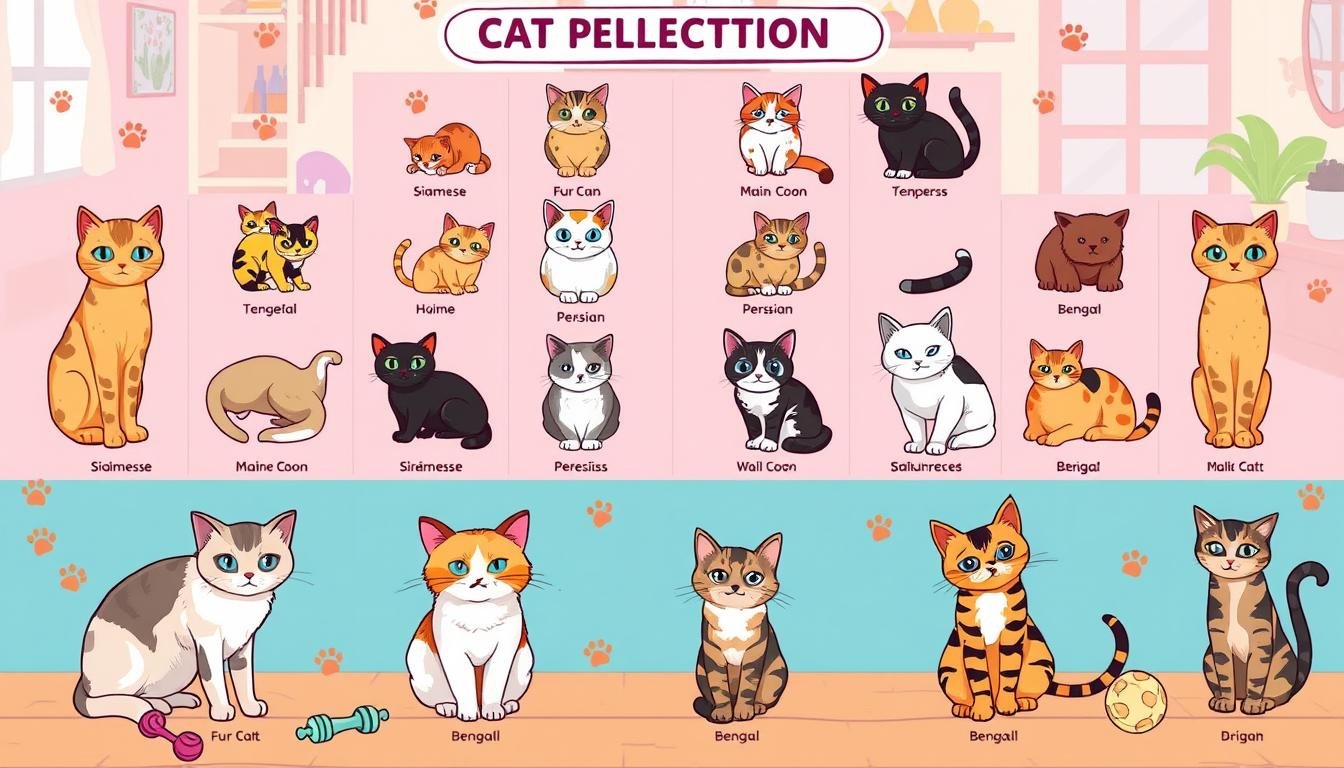
Choosing the right cat breed means knowing what makes each special. The Cat Fanciers’ Association lists 45 different cat breeds. This gives many options for cat lovers.
- Temperament variations across different breeds
- Social interaction needs
- Grooming requirements
- Energy levels
- Compatibility with your lifestyle
Some breeds are known for their unique traits. Ragdolls and Maine Coons are known for being gentle, great for families. On the other hand, Abyssinians and Devon Rex cats are full of energy and fun.
| Breed Category | Key Characteristics | Best Suited For |
|---|---|---|
| Vocal Breeds | Siamese, Tonkinese | Owners who enjoy interactive pets |
| Quiet Breeds | British Shorthair, Turkish Van | Calm living environments |
| Active Breeds | Bengal, Somali | Homes with outdoor access |
“Not all cats are created equal. Each breed brings its own unique personality to your home.” – Feline Expert
Practical things matter when picking a cat breed. Grooming needs differ a lot. Longhaired cats need weekly brushing, while short-haired ones need less.
Think about if you want an indoor cat or one that likes to go outside. Also, consider how much energy you want in your home and how social you want your cat to be.
What Cat Should I Buy: A Complete Guide to Making the Right Choice
Choosing the right cat is more than a simple decision. It’s about finding a lifelong companion that matches your lifestyle and personality. Understanding cat ownership will help you make an informed choice that brings joy to both you and your feline friend.
When deciding what cat to buy, several critical factors come into play. The perfect cat isn’t just about looks. It’s about finding a harmonious match for your home and heart.
Cat Personality Types
Cat personalities vary widely, ranging from incredibly social to fiercely independent. Understanding these differences is crucial for cat care and ensuring a happy relationship.
- Affectionate cats: Constantly seeking human interaction
- Independent cats: Enjoy personal space and minimal handling
- Playful cats: High energy, require lots of engagement
- Calm cats: Prefer quiet environments
Age Considerations
Each life stage of a cat brings unique characteristics and care requirements:
| Age Group | Characteristics | Care Needs |
|---|---|---|
| Kittens (7-9 weeks) | Highly adaptable, playful | Frequent feeding, socialization |
| Adult Cats | Established personality | Consistent routine, moderate interaction |
| Senior Cats | Calmer, less active | Regular veterinary checkups, specialized diet |
Health and Maintenance Requirements
Responsible cat ownership involves understanding long-term health commitments:
- Regular veterinary checkups
- Proper nutrition
- Grooming based on coat type
- Mental and physical stimulation
“The right cat isn’t just a pet—it’s a family member that requires love, understanding, and dedicated care.”
By carefully considering personality, age, and health requirements, you’ll be well-prepared to welcome the perfect feline companion into your home.
Popular Cat Breeds for Different Home Environments
Choosing the right cat breed can change your pet experience. Each breed fits different homes and lifestyles.
- Maine Coon: Great for big homes
- Weight: 3.6-8.2 kg
- Lifespan: Up to 14 years
- Good with kids
- Russian Blue: Best for small spaces
- Weight: 8-12 pounds
- Height: 8-10 inches
- Quiet and easy to adapt
- Bengal: Ideal for active homes
- Weight: 3.6-6.8 kg
- Lifespan: 12-16 years
- Needs lots of activity
“The right cat breed can bring joy and harmony to your home.” – Veterinary Feline Experts
Think about your home, activity level, and what you like when picking a cat breed. Some, like Abyssinian and Balinese, are perfect for small places but need lots of play and thought.
Indoor vs. Outdoor Considerations
Indoor cats are safer from diseases and might live longer. But, each breed is different indoors. So, do your homework for a happy pet life.
Understanding Purebred vs. Domestic Cats
Exploring cat breeds can be tricky for those who love pets. It’s key to know the difference between purebred and domestic cats. This helps in making a smart choice for your new pet.
The world of cat breeding is full of interesting facts about cat genetics and diversity. About 98% of cats are not purebred. They show a wide range of unique genetic mixes.
Pedigree Benefits and Considerations
Purebred cats have big advantages for those who want specific traits:
- Consistent physical characteristics
- Predictable personality traits
- Documented genetic lineage
- Potential for competitive show participation
Mixed Breed Advantages
Domestic cats also have great benefits for pet owners:
- Robust genetic diversity
- Lower likelihood of inherited health conditions
- Unique and unpredictable personalities
- More affordable cat costs
Cost Comparisons
| Cat Type | Average Purchase Price | Potential Health Costs |
|---|---|---|
| Purebred Cats | $500 – $2,000 | Higher genetic risk |
| Mixed Breed Cats | $50 – $200 | Lower genetic risk |
“In the world of cat breeds, diversity is not just beautiful—it’s a testament to nature’s incredible genetic complexity.” – Feline Genetics Research Institute
The Cat Fanciers’ Association recognizes 45 purebred cat breeds. Think about your lifestyle, budget, and preferences to find the right cat for you.
Matching Cat Personalities with Your Home Dynamic
Choosing a cat is more than just picking a cute furry friend. It’s about understanding cat personality to create a harmonious home. Not all cats fit every household perfectly. Careful consideration can prevent conflicts.
When selecting a cat, consider these key personality factors:
- Energy levels
- Social interaction needs
- Territorial tendencies
- Adaptability to existing pets
Different cat breeds have unique characteristics that affect pet ownership success. For example, Ragdolls are calm, making them great for families with kids. Bengals need lots of mental and physical activity and do well in active homes.
“The right cat can transform your home from just a living space to a true sanctuary of companionship.”
Shelters are great for finding the right cat. With over 11,500 shelters in the U.S., their staff know each cat’s behavior. They help you find the perfect feline companion.
Key considerations when choosing a cat include:
- Assess your home’s noise and activity levels
- Evaluate existing pets’ temperaments
- Consider your available time for interaction
- Understand potential territorial challenges
While breed traits help, individual cat personalities can vary. The best pet ownership is finding a cat that matches your home’s unique dynamic.
Financial Considerations of Cat Ownership
Getting a cat is more than just feeling happy. It means you have to think about the money too. Knowing all the costs helps you plan your budget. This way, your cat will get the best care possible.
Before you get a cat, think about how much it will cost. It’s not just the adoption fee. There are many other expenses to consider.
Initial Costs of Cat Ownership
- Adoption fees: $50 – $175
- Initial medical expenses: Around $365
- First-time supplies: $100 – $200
- Spaying/neutering: $50 – $200
Ongoing Monthly Expenses
| Expense Category | Average Monthly Cost |
|---|---|
| Food | $25 – $50 |
| Litter | $15 – $25 |
| Routine Veterinary Care | $25 – $50 |
| Miscellaneous Supplies | $10 – $30 |
Emergency Fund Planning
Unexpected vet bills can be tough on your wallet. Experts say to save $500-$1,000 for pet emergencies. Here are some tips:
- Open a special savings account for your cat
- Look into pet insurance
- Save for possible vet visits
“Responsible pet ownership means being prepared for both expected and unexpected expenses.”
Keeping a cat costs between $1,200 and $2,000 a year. It might seem a lot, but the love and happiness a cat gives is priceless. With good planning, you can give your cat the best care without worry.
Multiple Cat Households: Important Considerations
Creating a harmonious multi-cat household needs careful planning and understanding of feline characteristics. Having multiple cats can be rewarding but also challenging. Experts say 70% of cat owners have more than one cat, but managing their social dynamics is key.
The golden rule for successful cat care is to provide individual resources for each cat. This means:
- Separate food and water stations
- Multiple litter boxes (recommended ratio: number of cats plus one)
- Distinct resting areas
- Individual scratching posts
- Unique toy collections
“One extra resource can prevent 95% of potential territorial conflicts between cats.” – Feline Behavior Specialist
When introducing new cats, patience is crucial. Approximately 80% of veterinarians recommend gradual introductions to minimize stress. Cats from the same litter usually adjust better, with research showing stronger bonding when introduced together.
Potential challenges in multi-cat households include:
- Territorial marking
- Competitive behavior
- Stress-related health issues
- Communication difficulties
To keep a peaceful environment, spend time with each cat. Understand and respect their unique play preferences and emotional needs. By doing so, you can create a loving, stress-free home for your feline friends.
Conclusion
Choosing the right cat is more than just falling in love with a cute face. You need to think about your lifestyle, living space, and what you like. With 42 cat breeds in the U.S., finding the perfect cat takes careful thought.
Adopting a cat is a great way to add joy to your home and help a cat in need. Whether you want a playful kitten or a calm senior cat, knowing what you need helps find the right one. Mixed breed cats often have better health because of their varied genes.
Every cat is different, with its own personality and needs. Some, like Maine Coon and Ragdoll, are great for families. Others might be better for single people or seniors. Understanding what your cat needs ensures a happy and harmonious life together.
Don’t rush the adoption process. Learn about different breeds, visit shelters, and meet cats. Your patience and careful thought will help you find a cat that fits your life and becomes a beloved family member.
FAQ
How do I know which cat breed is right for my lifestyle?
What are the financial considerations of cat ownership?
FAQ
How do I know which cat breed is right for my lifestyle?
Think about your home, how much time you have, and what you like. Check if your home is big enough for a cat. Some cats, like Russian Blues, do well in small places. Others, like Maine Coons, need more room.
Match the cat’s personality with your daily life. This way, you and your cat will get along great.
What are the financial considerations of cat ownership?
First, you’ll need to pay for things like adoption fees and supplies. This can cost between 0 and
FAQ
How do I know which cat breed is right for my lifestyle?
Think about your home, how much time you have, and what you like. Check if your home is big enough for a cat. Some cats, like Russian Blues, do well in small places. Others, like Maine Coons, need more room.
Match the cat’s personality with your daily life. This way, you and your cat will get along great.
What are the financial considerations of cat ownership?
First, you’ll need to pay for things like adoption fees and supplies. This can cost between $500 and $1,500. Then, there are ongoing costs like food, litter, vet visits, and grooming. These can add up to $500 to $1,000 a year.
Always save for unexpected vet bills. You might want to get pet insurance too.
Should I adopt a kitten, adult, or senior cat?
Kittens are fun and playful but need lots of training. Adult cats are often calmer and have set personalities. Senior cats are quieter and might need more vet visits.
Think about your lifestyle and how much time you have. Choose based on what fits your life best.
What’s the difference between purebred and mixed breed cats?
Purebred cats have known traits and might be good for shows. But they can be pricey and have health issues. Mixed breed cats are often healthier, have unique personalities, and cost less upfront.
Think about what matters most to you: predictability, health, or budget.
How do I introduce a new cat to my existing pets?
Start by introducing them slowly in a safe place. Use separate areas at first and let them smell each other. Watch their first meeting closely.
Make sure they have their own things like litter boxes and food dishes. This helps prevent fights. Remember, each pet is different, so be patient.
What are the best cat breeds for first-time owners?
Look at breeds like American Shorthair, British Shorthair, or Ragdoll. They’re easy-going, adaptable, and don’t need too much grooming. They’re friendly and can fit into many homes, making them great for new owners.
How many cats should I have in my household?
Think about your home, money, and time. Two cats can be nice, but more cats mean more work and costs. Make sure you can give each cat what they need before getting more.
Where is the best place to adopt a cat?
Local shelters and rescue groups are great places to find a cat. They have many cats of different ages and breeds. These places often give medical checks and tell you about the cat’s personality.
You can also try online adoption sites or reputable breeders.
,500. Then, there are ongoing costs like food, litter, vet visits, and grooming. These can add up to 0 to
FAQ
How do I know which cat breed is right for my lifestyle?
Think about your home, how much time you have, and what you like. Check if your home is big enough for a cat. Some cats, like Russian Blues, do well in small places. Others, like Maine Coons, need more room.
Match the cat’s personality with your daily life. This way, you and your cat will get along great.
What are the financial considerations of cat ownership?
First, you’ll need to pay for things like adoption fees and supplies. This can cost between $500 and $1,500. Then, there are ongoing costs like food, litter, vet visits, and grooming. These can add up to $500 to $1,000 a year.
Always save for unexpected vet bills. You might want to get pet insurance too.
Should I adopt a kitten, adult, or senior cat?
Kittens are fun and playful but need lots of training. Adult cats are often calmer and have set personalities. Senior cats are quieter and might need more vet visits.
Think about your lifestyle and how much time you have. Choose based on what fits your life best.
What’s the difference between purebred and mixed breed cats?
Purebred cats have known traits and might be good for shows. But they can be pricey and have health issues. Mixed breed cats are often healthier, have unique personalities, and cost less upfront.
Think about what matters most to you: predictability, health, or budget.
How do I introduce a new cat to my existing pets?
Start by introducing them slowly in a safe place. Use separate areas at first and let them smell each other. Watch their first meeting closely.
Make sure they have their own things like litter boxes and food dishes. This helps prevent fights. Remember, each pet is different, so be patient.
What are the best cat breeds for first-time owners?
Look at breeds like American Shorthair, British Shorthair, or Ragdoll. They’re easy-going, adaptable, and don’t need too much grooming. They’re friendly and can fit into many homes, making them great for new owners.
How many cats should I have in my household?
Think about your home, money, and time. Two cats can be nice, but more cats mean more work and costs. Make sure you can give each cat what they need before getting more.
Where is the best place to adopt a cat?
Local shelters and rescue groups are great places to find a cat. They have many cats of different ages and breeds. These places often give medical checks and tell you about the cat’s personality.
You can also try online adoption sites or reputable breeders.
,000 a year.
Always save for unexpected vet bills. You might want to get pet insurance too.
Should I adopt a kitten, adult, or senior cat?
Kittens are fun and playful but need lots of training. Adult cats are often calmer and have set personalities. Senior cats are quieter and might need more vet visits.
Think about your lifestyle and how much time you have. Choose based on what fits your life best.
What’s the difference between purebred and mixed breed cats?
Purebred cats have known traits and might be good for shows. But they can be pricey and have health issues. Mixed breed cats are often healthier, have unique personalities, and cost less upfront.
Think about what matters most to you: predictability, health, or budget.
How do I introduce a new cat to my existing pets?
Start by introducing them slowly in a safe place. Use separate areas at first and let them smell each other. Watch their first meeting closely.
Make sure they have their own things like litter boxes and food dishes. This helps prevent fights. Remember, each pet is different, so be patient.
What are the best cat breeds for first-time owners?
Look at breeds like American Shorthair, British Shorthair, or Ragdoll. They’re easy-going, adaptable, and don’t need too much grooming. They’re friendly and can fit into many homes, making them great for new owners.
How many cats should I have in my household?
Think about your home, money, and time. Two cats can be nice, but more cats mean more work and costs. Make sure you can give each cat what they need before getting more.
Where is the best place to adopt a cat?
Local shelters and rescue groups are great places to find a cat. They have many cats of different ages and breeds. These places often give medical checks and tell you about the cat’s personality.
You can also try online adoption sites or reputable breeders.
FAQ
How do I know which cat breed is right for my lifestyle?
Think about your home, how much time you have, and what you like. Check if your home is big enough for a cat. Some cats, like Russian Blues, do well in small places. Others, like Maine Coons, need more room.
Match the cat’s personality with your daily life. This way, you and your cat will get along great.
What are the financial considerations of cat ownership?
First, you’ll need to pay for things like adoption fees and supplies. This can cost between 0 and
FAQ
How do I know which cat breed is right for my lifestyle?
Think about your home, how much time you have, and what you like. Check if your home is big enough for a cat. Some cats, like Russian Blues, do well in small places. Others, like Maine Coons, need more room.
Match the cat’s personality with your daily life. This way, you and your cat will get along great.
What are the financial considerations of cat ownership?
First, you’ll need to pay for things like adoption fees and supplies. This can cost between $500 and $1,500. Then, there are ongoing costs like food, litter, vet visits, and grooming. These can add up to $500 to $1,000 a year.
Always save for unexpected vet bills. You might want to get pet insurance too.
Should I adopt a kitten, adult, or senior cat?
Kittens are fun and playful but need lots of training. Adult cats are often calmer and have set personalities. Senior cats are quieter and might need more vet visits.
Think about your lifestyle and how much time you have. Choose based on what fits your life best.
What’s the difference between purebred and mixed breed cats?
Purebred cats have known traits and might be good for shows. But they can be pricey and have health issues. Mixed breed cats are often healthier, have unique personalities, and cost less upfront.
Think about what matters most to you: predictability, health, or budget.
How do I introduce a new cat to my existing pets?
Start by introducing them slowly in a safe place. Use separate areas at first and let them smell each other. Watch their first meeting closely.
Make sure they have their own things like litter boxes and food dishes. This helps prevent fights. Remember, each pet is different, so be patient.
What are the best cat breeds for first-time owners?
Look at breeds like American Shorthair, British Shorthair, or Ragdoll. They’re easy-going, adaptable, and don’t need too much grooming. They’re friendly and can fit into many homes, making them great for new owners.
How many cats should I have in my household?
Think about your home, money, and time. Two cats can be nice, but more cats mean more work and costs. Make sure you can give each cat what they need before getting more.
Where is the best place to adopt a cat?
Local shelters and rescue groups are great places to find a cat. They have many cats of different ages and breeds. These places often give medical checks and tell you about the cat’s personality.
You can also try online adoption sites or reputable breeders.
,500. Then, there are ongoing costs like food, litter, vet visits, and grooming. These can add up to 0 to
FAQ
How do I know which cat breed is right for my lifestyle?
Think about your home, how much time you have, and what you like. Check if your home is big enough for a cat. Some cats, like Russian Blues, do well in small places. Others, like Maine Coons, need more room.
Match the cat’s personality with your daily life. This way, you and your cat will get along great.
What are the financial considerations of cat ownership?
First, you’ll need to pay for things like adoption fees and supplies. This can cost between $500 and $1,500. Then, there are ongoing costs like food, litter, vet visits, and grooming. These can add up to $500 to $1,000 a year.
Always save for unexpected vet bills. You might want to get pet insurance too.
Should I adopt a kitten, adult, or senior cat?
Kittens are fun and playful but need lots of training. Adult cats are often calmer and have set personalities. Senior cats are quieter and might need more vet visits.
Think about your lifestyle and how much time you have. Choose based on what fits your life best.
What’s the difference between purebred and mixed breed cats?
Purebred cats have known traits and might be good for shows. But they can be pricey and have health issues. Mixed breed cats are often healthier, have unique personalities, and cost less upfront.
Think about what matters most to you: predictability, health, or budget.
How do I introduce a new cat to my existing pets?
Start by introducing them slowly in a safe place. Use separate areas at first and let them smell each other. Watch their first meeting closely.
Make sure they have their own things like litter boxes and food dishes. This helps prevent fights. Remember, each pet is different, so be patient.
What are the best cat breeds for first-time owners?
Look at breeds like American Shorthair, British Shorthair, or Ragdoll. They’re easy-going, adaptable, and don’t need too much grooming. They’re friendly and can fit into many homes, making them great for new owners.
How many cats should I have in my household?
Think about your home, money, and time. Two cats can be nice, but more cats mean more work and costs. Make sure you can give each cat what they need before getting more.
Where is the best place to adopt a cat?
Local shelters and rescue groups are great places to find a cat. They have many cats of different ages and breeds. These places often give medical checks and tell you about the cat’s personality.
You can also try online adoption sites or reputable breeders.
,000 a year.
Always save for unexpected vet bills. You might want to get pet insurance too.
Should I adopt a kitten, adult, or senior cat?
Kittens are fun and playful but need lots of training. Adult cats are often calmer and have set personalities. Senior cats are quieter and might need more vet visits.
Think about your lifestyle and how much time you have. Choose based on what fits your life best.
What’s the difference between purebred and mixed breed cats?
Purebred cats have known traits and might be good for shows. But they can be pricey and have health issues. Mixed breed cats are often healthier, have unique personalities, and cost less upfront.
Think about what matters most to you: predictability, health, or budget.
How do I introduce a new cat to my existing pets?
Start by introducing them slowly in a safe place. Use separate areas at first and let them smell each other. Watch their first meeting closely.
Make sure they have their own things like litter boxes and food dishes. This helps prevent fights. Remember, each pet is different, so be patient.
What are the best cat breeds for first-time owners?
Look at breeds like American Shorthair, British Shorthair, or Ragdoll. They’re easy-going, adaptable, and don’t need too much grooming. They’re friendly and can fit into many homes, making them great for new owners.
How many cats should I have in my household?
Think about your home, money, and time. Two cats can be nice, but more cats mean more work and costs. Make sure you can give each cat what they need before getting more.
Where is the best place to adopt a cat?
Local shelters and rescue groups are great places to find a cat. They have many cats of different ages and breeds. These places often give medical checks and tell you about the cat’s personality.
You can also try online adoption sites or reputable breeders.
FAQ
How do I know which cat breed is right for my lifestyle?
Think about your home, how much time you have, and what you like. Check if your home is big enough for a cat. Some cats, like Russian Blues, do well in small places. Others, like Maine Coons, need more room.
Match the cat’s personality with your daily life. This way, you and your cat will get along great.
What are the financial considerations of cat ownership?
First, you’ll need to pay for things like adoption fees and supplies. This can cost between 0 and
FAQ
How do I know which cat breed is right for my lifestyle?
Think about your home, how much time you have, and what you like. Check if your home is big enough for a cat. Some cats, like Russian Blues, do well in small places. Others, like Maine Coons, need more room.
Match the cat’s personality with your daily life. This way, you and your cat will get along great.
What are the financial considerations of cat ownership?
First, you’ll need to pay for things like adoption fees and supplies. This can cost between $500 and $1,500. Then, there are ongoing costs like food, litter, vet visits, and grooming. These can add up to $500 to $1,000 a year.
Always save for unexpected vet bills. You might want to get pet insurance too.
Should I adopt a kitten, adult, or senior cat?
Kittens are fun and playful but need lots of training. Adult cats are often calmer and have set personalities. Senior cats are quieter and might need more vet visits.
Think about your lifestyle and how much time you have. Choose based on what fits your life best.
What’s the difference between purebred and mixed breed cats?
Purebred cats have known traits and might be good for shows. But they can be pricey and have health issues. Mixed breed cats are often healthier, have unique personalities, and cost less upfront.
Think about what matters most to you: predictability, health, or budget.
How do I introduce a new cat to my existing pets?
Start by introducing them slowly in a safe place. Use separate areas at first and let them smell each other. Watch their first meeting closely.
Make sure they have their own things like litter boxes and food dishes. This helps prevent fights. Remember, each pet is different, so be patient.
What are the best cat breeds for first-time owners?
Look at breeds like American Shorthair, British Shorthair, or Ragdoll. They’re easy-going, adaptable, and don’t need too much grooming. They’re friendly and can fit into many homes, making them great for new owners.
How many cats should I have in my household?
Think about your home, money, and time. Two cats can be nice, but more cats mean more work and costs. Make sure you can give each cat what they need before getting more.
Where is the best place to adopt a cat?
Local shelters and rescue groups are great places to find a cat. They have many cats of different ages and breeds. These places often give medical checks and tell you about the cat’s personality.
You can also try online adoption sites or reputable breeders.
,500. Then, there are ongoing costs like food, litter, vet visits, and grooming. These can add up to 0 to
FAQ
How do I know which cat breed is right for my lifestyle?
Think about your home, how much time you have, and what you like. Check if your home is big enough for a cat. Some cats, like Russian Blues, do well in small places. Others, like Maine Coons, need more room.
Match the cat’s personality with your daily life. This way, you and your cat will get along great.
What are the financial considerations of cat ownership?
First, you’ll need to pay for things like adoption fees and supplies. This can cost between $500 and $1,500. Then, there are ongoing costs like food, litter, vet visits, and grooming. These can add up to $500 to $1,000 a year.
Always save for unexpected vet bills. You might want to get pet insurance too.
Should I adopt a kitten, adult, or senior cat?
Kittens are fun and playful but need lots of training. Adult cats are often calmer and have set personalities. Senior cats are quieter and might need more vet visits.
Think about your lifestyle and how much time you have. Choose based on what fits your life best.
What’s the difference between purebred and mixed breed cats?
Purebred cats have known traits and might be good for shows. But they can be pricey and have health issues. Mixed breed cats are often healthier, have unique personalities, and cost less upfront.
Think about what matters most to you: predictability, health, or budget.
How do I introduce a new cat to my existing pets?
Start by introducing them slowly in a safe place. Use separate areas at first and let them smell each other. Watch their first meeting closely.
Make sure they have their own things like litter boxes and food dishes. This helps prevent fights. Remember, each pet is different, so be patient.
What are the best cat breeds for first-time owners?
Look at breeds like American Shorthair, British Shorthair, or Ragdoll. They’re easy-going, adaptable, and don’t need too much grooming. They’re friendly and can fit into many homes, making them great for new owners.
How many cats should I have in my household?
Think about your home, money, and time. Two cats can be nice, but more cats mean more work and costs. Make sure you can give each cat what they need before getting more.
Where is the best place to adopt a cat?
Local shelters and rescue groups are great places to find a cat. They have many cats of different ages and breeds. These places often give medical checks and tell you about the cat’s personality.
You can also try online adoption sites or reputable breeders.
,000 a year.
Always save for unexpected vet bills. You might want to get pet insurance too.
Should I adopt a kitten, adult, or senior cat?
Kittens are fun and playful but need lots of training. Adult cats are often calmer and have set personalities. Senior cats are quieter and might need more vet visits.
Think about your lifestyle and how much time you have. Choose based on what fits your life best.
What’s the difference between purebred and mixed breed cats?
Purebred cats have known traits and might be good for shows. But they can be pricey and have health issues. Mixed breed cats are often healthier, have unique personalities, and cost less upfront.
Think about what matters most to you: predictability, health, or budget.
How do I introduce a new cat to my existing pets?
Start by introducing them slowly in a safe place. Use separate areas at first and let them smell each other. Watch their first meeting closely.
Make sure they have their own things like litter boxes and food dishes. This helps prevent fights. Remember, each pet is different, so be patient.
What are the best cat breeds for first-time owners?
Look at breeds like American Shorthair, British Shorthair, or Ragdoll. They’re easy-going, adaptable, and don’t need too much grooming. They’re friendly and can fit into many homes, making them great for new owners.
How many cats should I have in my household?
Think about your home, money, and time. Two cats can be nice, but more cats mean more work and costs. Make sure you can give each cat what they need before getting more.
Where is the best place to adopt a cat?
Local shelters and rescue groups are great places to find a cat. They have many cats of different ages and breeds. These places often give medical checks and tell you about the cat’s personality.
You can also try online adoption sites or reputable breeders.
FAQ
How do I know which cat breed is right for my lifestyle?
Think about your home, how much time you have, and what you like. Check if your home is big enough for a cat. Some cats, like Russian Blues, do well in small places. Others, like Maine Coons, need more room.
Match the cat’s personality with your daily life. This way, you and your cat will get along great.
What are the financial considerations of cat ownership?
First, you’ll need to pay for things like adoption fees and supplies. This can cost between 0 and
FAQ
How do I know which cat breed is right for my lifestyle?
Think about your home, how much time you have, and what you like. Check if your home is big enough for a cat. Some cats, like Russian Blues, do well in small places. Others, like Maine Coons, need more room.
Match the cat’s personality with your daily life. This way, you and your cat will get along great.
What are the financial considerations of cat ownership?
First, you’ll need to pay for things like adoption fees and supplies. This can cost between $500 and $1,500. Then, there are ongoing costs like food, litter, vet visits, and grooming. These can add up to $500 to $1,000 a year.
Always save for unexpected vet bills. You might want to get pet insurance too.
Should I adopt a kitten, adult, or senior cat?
Kittens are fun and playful but need lots of training. Adult cats are often calmer and have set personalities. Senior cats are quieter and might need more vet visits.
Think about your lifestyle and how much time you have. Choose based on what fits your life best.
What’s the difference between purebred and mixed breed cats?
Purebred cats have known traits and might be good for shows. But they can be pricey and have health issues. Mixed breed cats are often healthier, have unique personalities, and cost less upfront.
Think about what matters most to you: predictability, health, or budget.
How do I introduce a new cat to my existing pets?
Start by introducing them slowly in a safe place. Use separate areas at first and let them smell each other. Watch their first meeting closely.
Make sure they have their own things like litter boxes and food dishes. This helps prevent fights. Remember, each pet is different, so be patient.
What are the best cat breeds for first-time owners?
Look at breeds like American Shorthair, British Shorthair, or Ragdoll. They’re easy-going, adaptable, and don’t need too much grooming. They’re friendly and can fit into many homes, making them great for new owners.
How many cats should I have in my household?
Think about your home, money, and time. Two cats can be nice, but more cats mean more work and costs. Make sure you can give each cat what they need before getting more.
Where is the best place to adopt a cat?
Local shelters and rescue groups are great places to find a cat. They have many cats of different ages and breeds. These places often give medical checks and tell you about the cat’s personality.
You can also try online adoption sites or reputable breeders.
,500. Then, there are ongoing costs like food, litter, vet visits, and grooming. These can add up to 0 to
FAQ
How do I know which cat breed is right for my lifestyle?
Think about your home, how much time you have, and what you like. Check if your home is big enough for a cat. Some cats, like Russian Blues, do well in small places. Others, like Maine Coons, need more room.
Match the cat’s personality with your daily life. This way, you and your cat will get along great.
What are the financial considerations of cat ownership?
First, you’ll need to pay for things like adoption fees and supplies. This can cost between $500 and $1,500. Then, there are ongoing costs like food, litter, vet visits, and grooming. These can add up to $500 to $1,000 a year.
Always save for unexpected vet bills. You might want to get pet insurance too.
Should I adopt a kitten, adult, or senior cat?
Kittens are fun and playful but need lots of training. Adult cats are often calmer and have set personalities. Senior cats are quieter and might need more vet visits.
Think about your lifestyle and how much time you have. Choose based on what fits your life best.
What’s the difference between purebred and mixed breed cats?
Purebred cats have known traits and might be good for shows. But they can be pricey and have health issues. Mixed breed cats are often healthier, have unique personalities, and cost less upfront.
Think about what matters most to you: predictability, health, or budget.
How do I introduce a new cat to my existing pets?
Start by introducing them slowly in a safe place. Use separate areas at first and let them smell each other. Watch their first meeting closely.
Make sure they have their own things like litter boxes and food dishes. This helps prevent fights. Remember, each pet is different, so be patient.
What are the best cat breeds for first-time owners?
Look at breeds like American Shorthair, British Shorthair, or Ragdoll. They’re easy-going, adaptable, and don’t need too much grooming. They’re friendly and can fit into many homes, making them great for new owners.
How many cats should I have in my household?
Think about your home, money, and time. Two cats can be nice, but more cats mean more work and costs. Make sure you can give each cat what they need before getting more.
Where is the best place to adopt a cat?
Local shelters and rescue groups are great places to find a cat. They have many cats of different ages and breeds. These places often give medical checks and tell you about the cat’s personality.
You can also try online adoption sites or reputable breeders.
,000 a year.
Always save for unexpected vet bills. You might want to get pet insurance too.
Should I adopt a kitten, adult, or senior cat?
Kittens are fun and playful but need lots of training. Adult cats are often calmer and have set personalities. Senior cats are quieter and might need more vet visits.
Think about your lifestyle and how much time you have. Choose based on what fits your life best.
What’s the difference between purebred and mixed breed cats?
Purebred cats have known traits and might be good for shows. But they can be pricey and have health issues. Mixed breed cats are often healthier, have unique personalities, and cost less upfront.
Think about what matters most to you: predictability, health, or budget.
How do I introduce a new cat to my existing pets?
Start by introducing them slowly in a safe place. Use separate areas at first and let them smell each other. Watch their first meeting closely.
Make sure they have their own things like litter boxes and food dishes. This helps prevent fights. Remember, each pet is different, so be patient.
What are the best cat breeds for first-time owners?
Look at breeds like American Shorthair, British Shorthair, or Ragdoll. They’re easy-going, adaptable, and don’t need too much grooming. They’re friendly and can fit into many homes, making them great for new owners.
How many cats should I have in my household?
Think about your home, money, and time. Two cats can be nice, but more cats mean more work and costs. Make sure you can give each cat what they need before getting more.
Where is the best place to adopt a cat?
Local shelters and rescue groups are great places to find a cat. They have many cats of different ages and breeds. These places often give medical checks and tell you about the cat’s personality.
You can also try online adoption sites or reputable breeders.


Leave a Reply